





Marking 15 Years of the Young India Fellowship: Celebrating Class of 2026
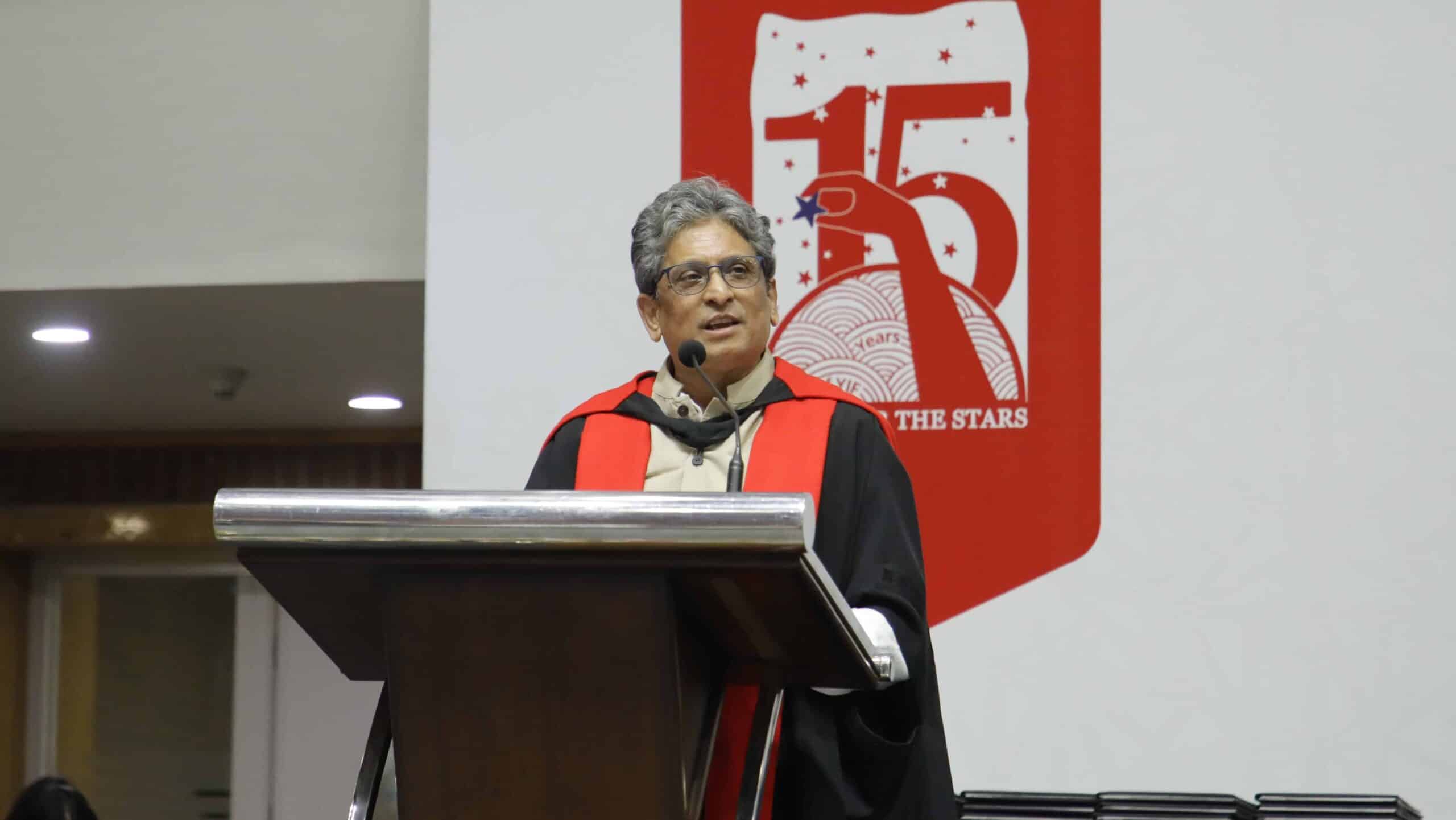
Delivering the keynote address, Professor Shailaja Paik invited the graduating fellows to view the uncertainties of the present moment not with fear, but with responsibility.
 1
1 
The Young India Fellowship (YIF) at Ashoka University marked a significant milestone with the graduation of its 15th cohort, celebrating fifteen years of a programme that has reimagined liberal arts education in India. Bringing together graduating fellows, faculty, alumni, families and distinguished guests, the convocation reflected on the ideas and values that have shaped the fellowship since its inception.
The ceremony was graced by Professor Shailaja Paik, MacArthur Fellow and Charles Phelps Taft Distinguished Research Professor of History at the University of Cincinnati, as the Chief Guest. She was joined by Ashoka University’s Chancellor, Professor Rudrangshu Mukherjee, Vice-Chancellor Professor Somak Raychaudhury, Chairperson of the Board of Trustees and Founding Dean of the Young India Fellowship, Dr Pramath Raj Sinha, along with faculty members, founders, university leadership, and the families and friends of the graduating fellows.
Fifteen Years of Inspiring Young Minds
Opening the ceremony, Chancellor Professor Rudrangshu Mukherjee reflected on the origins of the Young India Fellowship, recalling a conversation with Dr Pramath Raj Sinha in 2011 that would go on to shape the future of liberal arts education in India. Invited to teach Reason and the Making of Modern India to the programme’s inaugural cohort, he described the experience as an ‘intellectual adventure’, something that has continued with every batch since.
Reflecting on the fellowship’s journey over the past fifteen years, Professor Mukherjee observed that while much has evolved, its defining spirit of intellectual curiosity and exploration has remained unchanged. Having taught the same course to every Young India Fellowship cohort since the programme’s inception, he remarked that this sense of adventure ‘has not evaporated.’
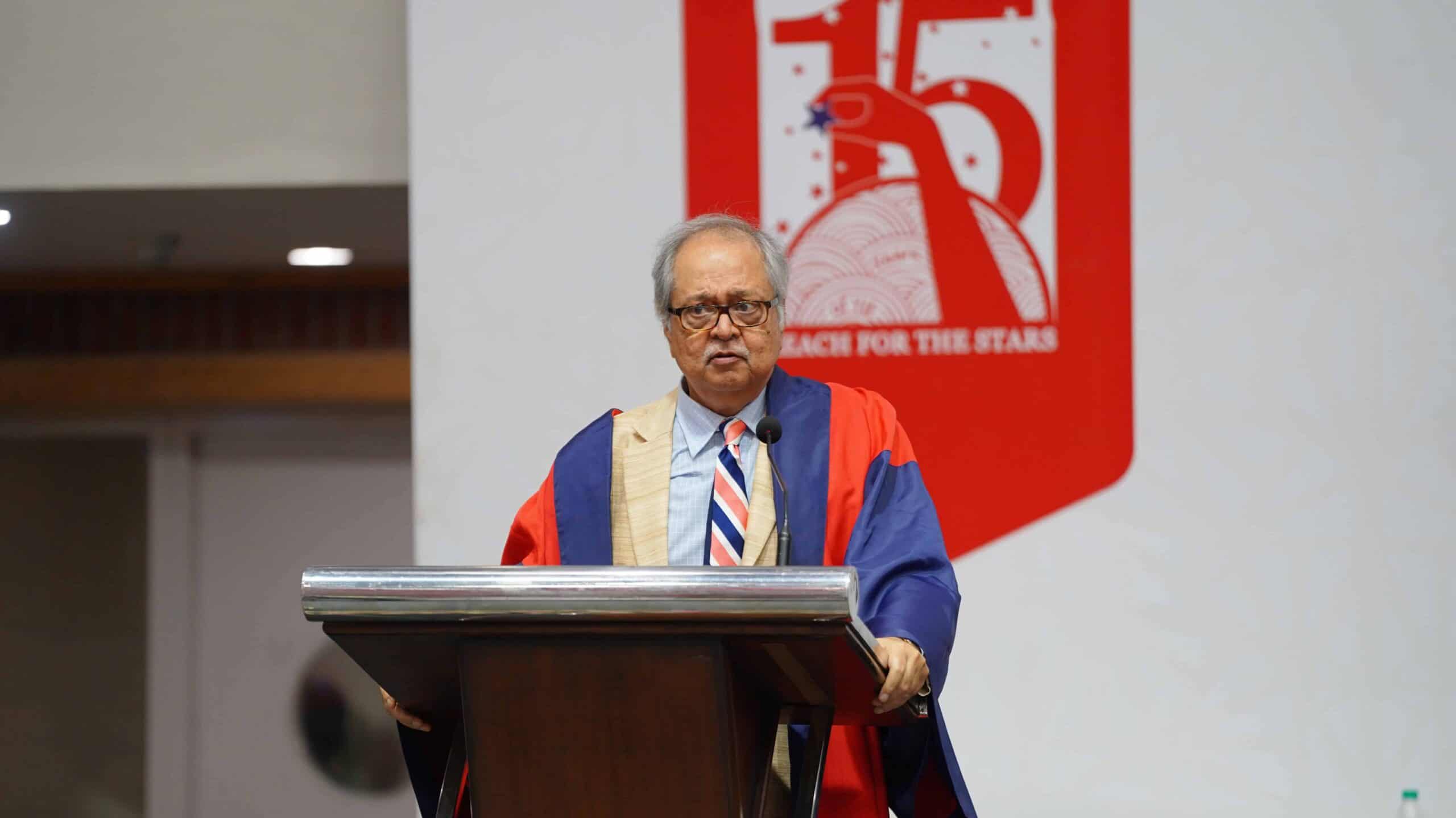
Looking back on his association with the programme, Professor Mukherjee shared that his most abiding memories are inextricably tied to the classroom interactions he has shared with fellows year after year. Expressing his gratitude for their affection and trust, he said that he ‘wouldn’t exchange the sense of fellowship for anything in the world.’
Congratulating the graduating class, he concluded:
‘To the Young India Fellows receiving their diplomas this afternoon, heartiest congratulations and all good wishes as you embark on the next stage of the journey of life. So, onwards and upwards.’
Building on those memories, Dr Pramath Raj Sinha spoke about the founding philosophy that shaped the fellowship from its inception. The vision, he explained, was never merely to create another academic programme but to build a space where exceptional faculty from diverse disciplines could inspire young people to think differently about themselves and the world around them.
For Dr Sinha, what made the fellowship unique was the people whom the fellows got to interact with rather than the subjects they taught.
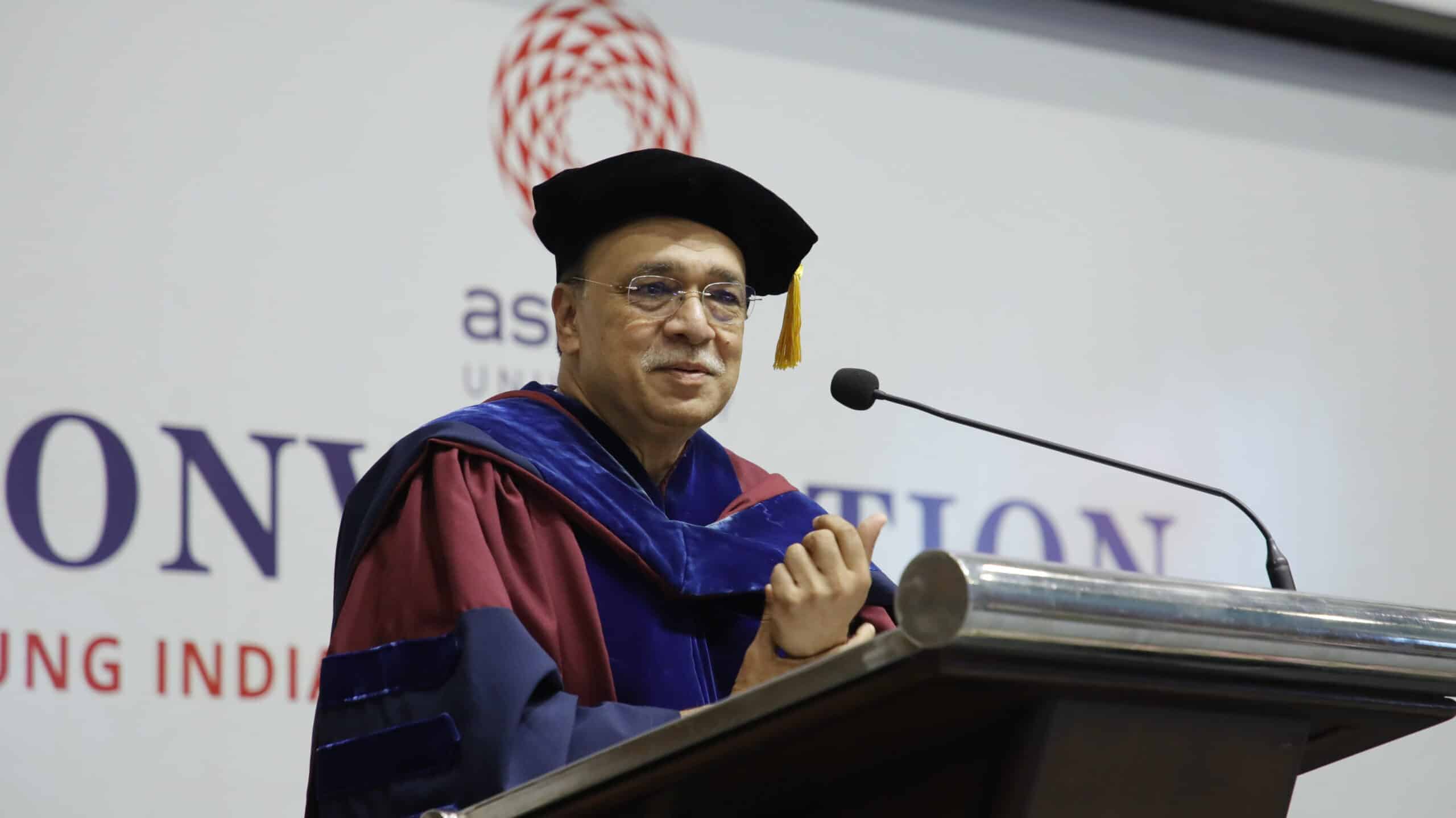
‘You always remember the best teachers. You don’t really remember what they taught or where they taught. You remember them because they were inspiring. That is what we are trying to do here.’
Addressing the graduating cohort, Vice-Chancellor Professor Somak Raychaudhury reflected on the distinctive character of the Young India Fellowship and why, even after fifteen years, it continues to occupy a unique place within Ashoka. Drawing on his own experience of teaching elective courses to the fellows, he shared that one of the most rewarding aspects of this experience has been to witness how the fellows could draw connections between the sky, stars, astronomy and the remarkable range of human concerns.
Describing the fellowship as Ashoka’s ‘most unique experiment’, Professor Raychaudhury said its strength lies not only in its interdisciplinary curriculum but also in its rigorous and distinctive approach, one that encourages fellows to embrace uncertainty and recognise that there is always more to learn.
He said, ‘In a world marked by complexity, disagreement and constant change, the capacity to listen, to question, and to rethink is extremely vital. Ashoka has been founded on the belief that the most important problems in the world cannot be understood through a single lens.’
Speaking at his final Young India Fellowship Convocation as Vice-Chancellor, Professor Raychaudhury left the graduating class with a message that captured the spirit of the programme:
‘Go forward with curiosity. Go forward with kindness. With integrity. Remember that the most important education happens not in classrooms, but in the choices you make, the commitments you honour, and the way you treat others.’
Reflect, Re-examine, Re-imagine, Reconstruct
Delivering the keynote address, Professor Shailaja Paik invited the graduating fellows to view the uncertainties of the present moment not with fear, but with responsibility. Speaking about a world shaped by conflict, ecological crises, democratic fragility, inequality, and rapidly changing technologies, she reminded the graduating class that this was not a time for indifference but for thoughtful engagement.
She encouraged the fellows to remember what she called the ‘Four Rs’: ‘Reflect. Re-examine. Re-imagine. Reconstruct.’ Rather than merely inheriting the world as it exists, she urged them to become active participants in shaping a more just and equitable future.
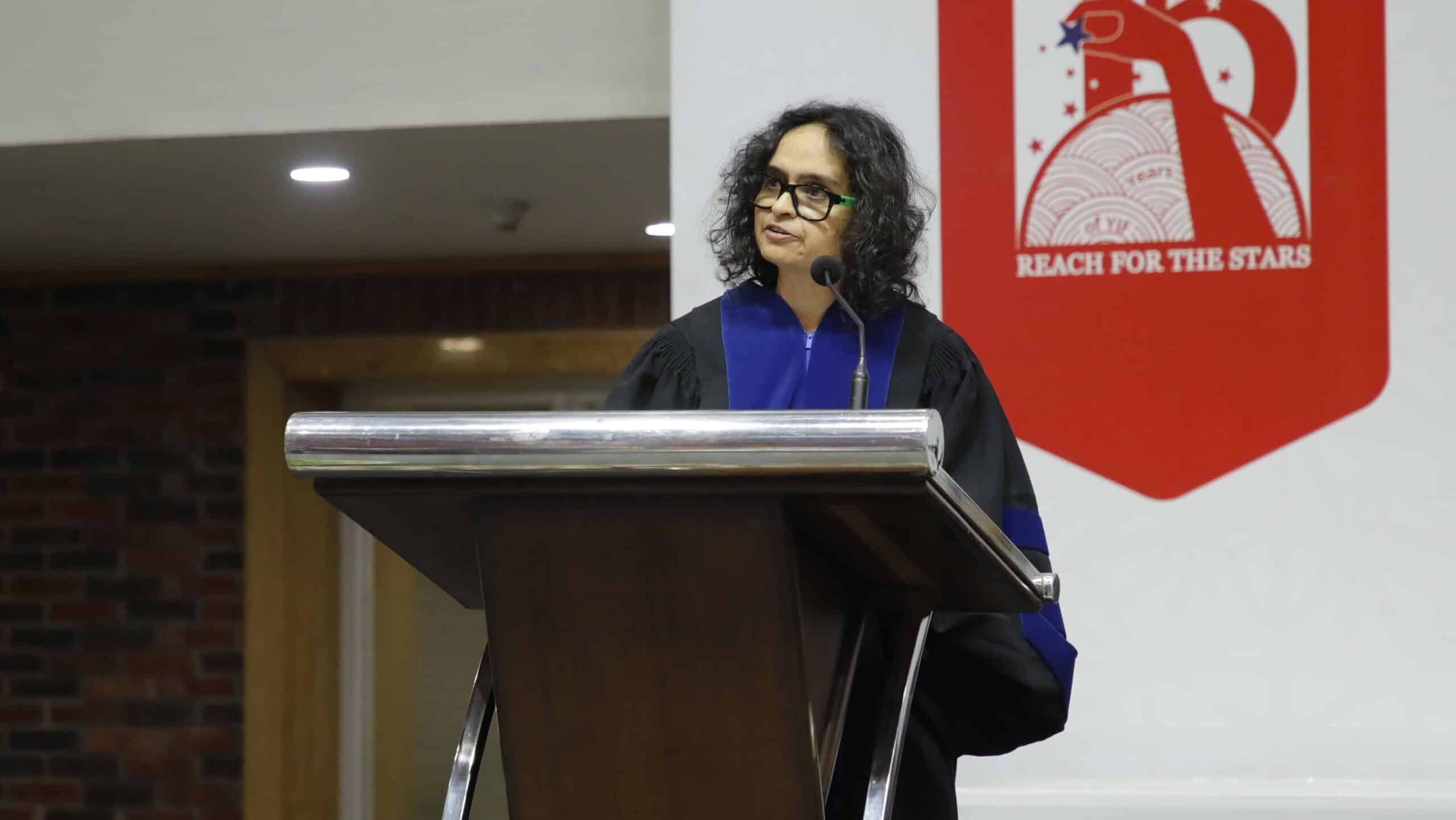
‘You can change the lives of many people through what you build, what you write, what you research, and what you refuse to ignore.’
Drawing from her own experiences as a teacher, historian, daughter, mother, researcher and MacArthur Genius Fellow, Professor Paik encouraged the graduating class to remain steadfast in their convictions, even when the path ahead felt uncertain.
Concluding her address, she encouraged the fellows to continue growing, not only in knowledge, but also in compassion, courage and integrity.
A Fellowship Defined by its People
On what distinguishes the YIF, Karan Bhola, Senior Director of the Young India Fellowship, said that the programme’s greatest strength has always been the extraordinary diversity of people who come together each year.
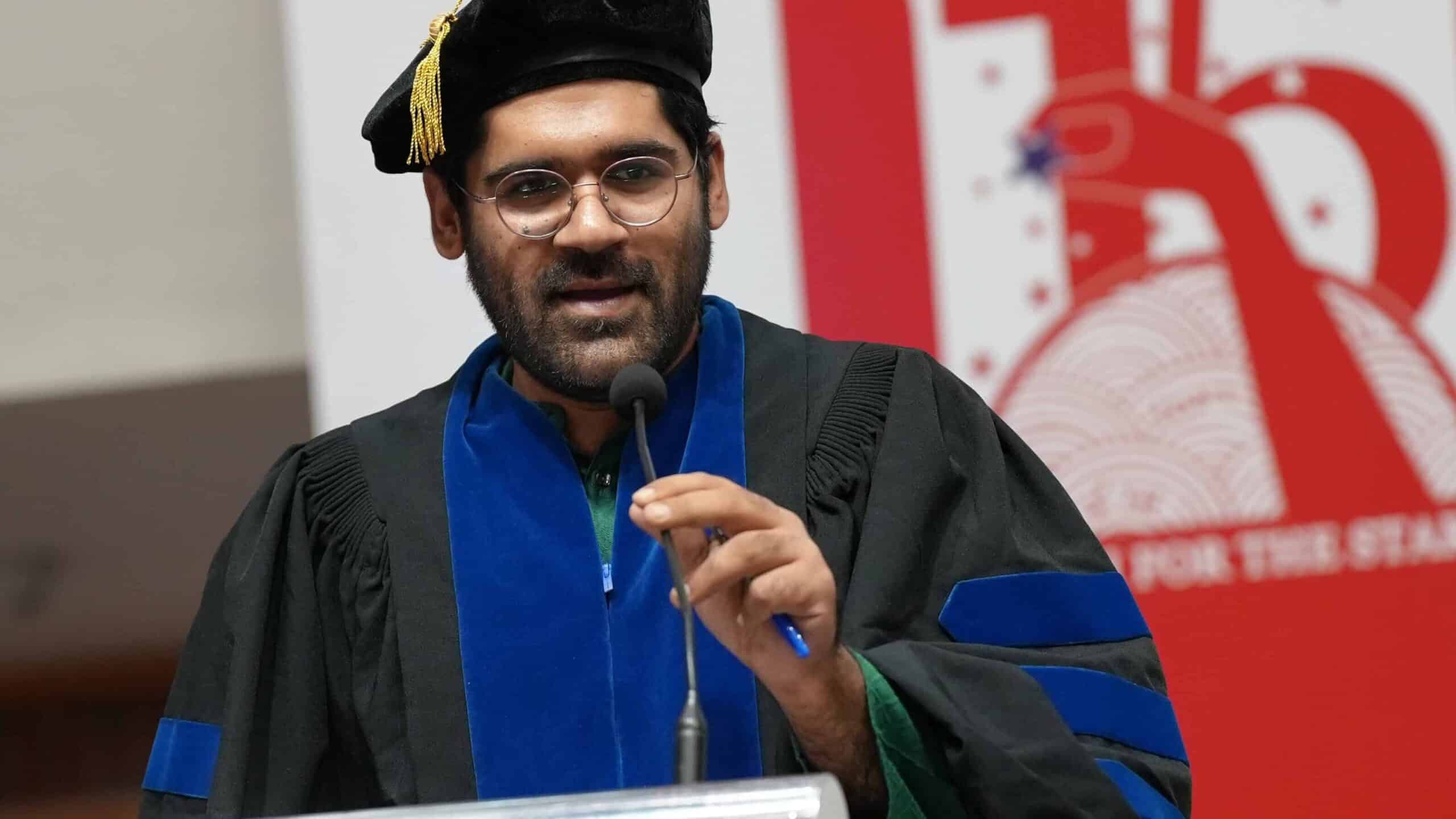
‘The Young India Fellowship has, for fifteen years, drawn its strength from the remarkable range of individuals who have become a part of each class.’
He noted that this year’s graduating cohort brings together fellows from 64 towns and cities across 23 states and regions, representing four nationalities and collectively speaking more than 35 languages.
He further emphasised that the cohort also reflects the programme’s commitment to accessibility and inclusion. Every fellow in the 15th cohort received scholarship support, made possible in large part through the generous philanthropic support of HDFC Bank, with 16 fellows receiving the Chancellor’s Merit Scholarship. One in three fellows identify as first-generation college-goers; 59% identify as women; 59% bring prior full-time work experience; and 33% entered the programme with postgraduate credentials.
Celebrating Learning and Community
The ceremony also recognised fellows whose academic excellence, leadership and contributions had shaped the fellowship community throughout the year.
The YIF Scholar Award was presented to Debarati Pal for outstanding academic achievement and commitment to learning.
The Torchbearer Award was conferred on Abhinav Saisrivatsav Poludasu, whose address resonated deeply with the values of community that have long defined the fellowship.
The Spirit of YIF Award recognised Disha Chopra for her contribution to the fellowship community.
The Cheistha Kochhar Memorial Honour, instituted in memory of YIF alumna Cheistha Kochhar, was jointly awarded to Hritika Singh and Santosh Madhukar Rasve for embodying the values of care, compassion and community service.
The ceremony also celebrated the interdisciplinary work undertaken through the Experience Learning Module (ELM), recognising projects spanning women’s health, accessibility, sustainable tourism, governance, education and community development.
The Fellowship Never Ends
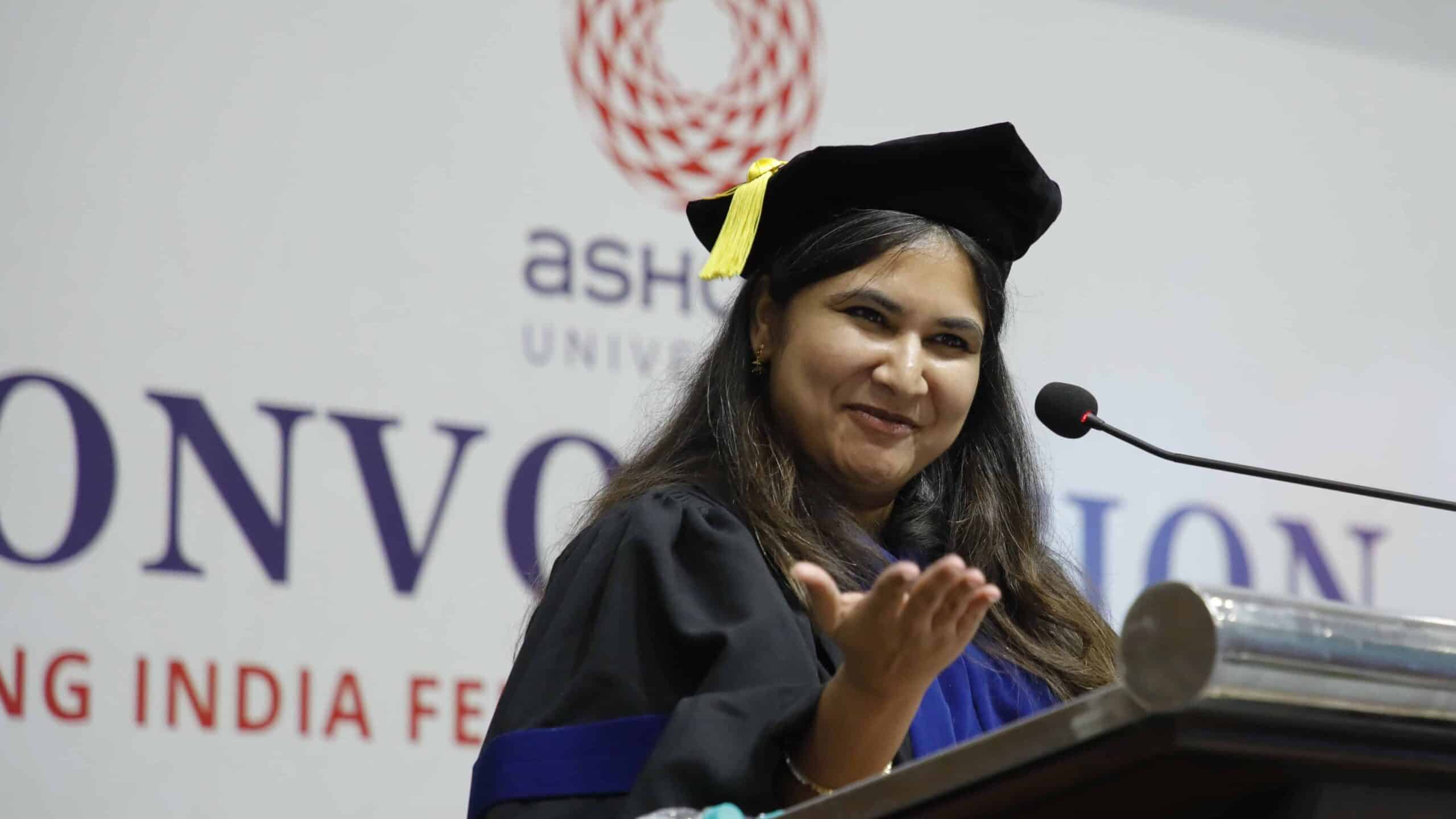
Bringing the ceremony to a close, Director of the Young India Fellowship, Anushka Siddiqui, reflected on what graduation truly means within the YIF community. She reminded the graduating fellows that while their year on campus had come to an end, their journey as members of the fellowship community was only beginning.
‘The real fellowship begins now.’
Encouraging the graduating class to remain connected, she concluded with a sentiment that has become synonymous with the programme:
‘The fellowship never ends.‘
As the Class of 2026 celebrated alongside faculty, families and friends, the ceremony marked more than the conclusion of a year-long programme. It celebrated fifteen years of a fellowship that continues to nurture intellectually curious, socially conscious and ethically grounded leaders. For the graduating fellows, it was both a culmination and a beginning, a reminder that while the year had come to an end, the fellowship would continue long after they left the Ashoka campus.