Department of Computer Science
The Department of Computer Science at Ashoka University fosters a research-driven approach to both foundational and applied areas of computing. Its unique positioning within a liberal arts environment provides a distinctive opportunity to advance core computer science research while also exploring interdisciplinary applications across the natural and social sciences. Our department values the cross-pollination of ideas from diverse fields, not only to solve existing problems but to ask novel research questions that deepen and expand the scope of computer science. Through this integration of foundational knowledge and interdisciplinary engagement, Ashoka’s CS department contributes meaningfully to both the theoretical and societal dimensions of the field.
Centres and Labs affiliated with Department of Computer Science:
Faculty in Computer Science
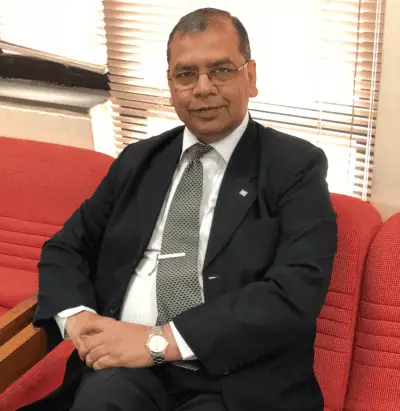
Adjunct Professor of Computer Science, Ashoka University
PhD University of Utah
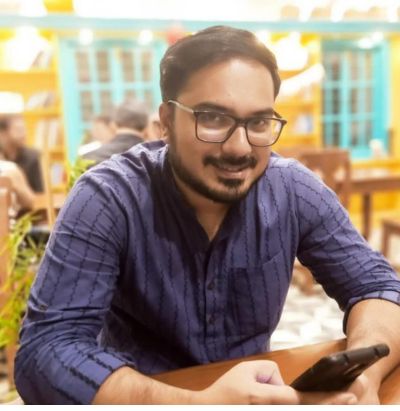
Assistant Professor, Computer Science, Ashoka University
PhD IIT Kharagpur
Head of the Department & Professor of Computer Science, Ashoka University
PhD, Indian Institute of Science
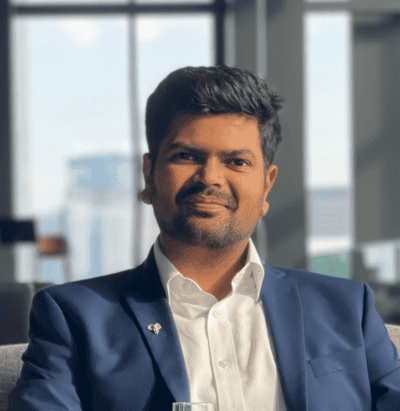
Assistant Professor, Computer Science, Ashoka University
PhD University of Illinois Chicago
Dean, Vachani School of Advanced Computing Professor of Computer Science, Ashoka University
PhD IIT Kharagpur
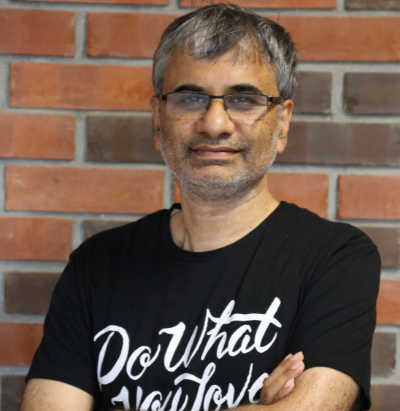
Professor of Computer Science, Ashoka University
PhD IIT Kharagpur
Professor of Computer Science, Ashoka University
PhD IIT Kharagpur
Associate Professor of Computer Science, Ashoka University
PhD, Yale University
Associate Professor of Computer Science, Ashoka University
Ph.D. Indian Statistical Institute, Kolkata
Professor of Computer Science, Director, Safexpress Centre for Data, Learning and Decision Sciences Ashoka University
PhD, Stanford
Professor, Computer Science, Ashoka University
PhD Stony Brook University
Dean, Student Affairs; Dean, Office of Academic Affairs; Professor, Computer Science, Ashoka University
PhD (Computer Science), University of Maryland, College Park, USA.
Assistant Professor of Computer Science, Ashoka University
Ph.D. IIT Delhi
Assistant Professor of Computer Science, Ashoka University
PhD,University of Pennsylvania
Visiting Professor of the Practice in Computer Science, Ashoka University
Ph.D. Stanford University
Visiting Faculty of Computer Science, Ashoka University
Ph.D. Tata Institute of Fundamental Research (Mumbai)
WP_Query Object
(
[query] => Array
(
[post_type] => tribe_events
[posts_per_page] => 5
[post_status] => publish
[orderby] => Array
(
[post_date] => ASC
[tec_event_start_date] => ASC
)
[order] => DESC
[tax_query] => Array
(
[0] => Array
(
[taxonomy] => post_tag
[field] => term_id
[terms] => 1541
)
)
[meta_query] => Array
(
[tec_event_start_date] => Array
(
[key] => _EventStartDate
[compare] => EXISTS
)
[tec_event_end_date] => Array
(
[key] => _EventEndDate
[value] => 2026-10-01 14:50:24
[compare] => >=
[type] => DATETIME
)
)
)
[query_vars] => Array
(
[post_type] => tribe_events
[posts_per_page] => 5
[post_status] => publish
[orderby] => Array
(
[post_date] => ASC
[tec_event_start_date] => ASC
)
[order] => DESC
[tax_query] => Array
(
[0] => Array
(
[taxonomy] => post_tag
[field] => term_id
[terms] => 1541
)
)
[error] =>
[m] =>
[p] => 0
[post_parent] =>
[subpost] =>
[subpost_id] =>
[attachment] =>
[attachment_id] => 0
[name] =>
[pagename] =>
[page_id] => 0
[second] =>
[minute] =>
[hour] =>
[day] => 0
[monthnum] => 0
[year] => 0
[w] => 0
[category_name] =>
[tag] =>
[cat] =>
[tag_id] => 1541
[author] =>
[author_name] =>
[feed] =>
[tb] =>
[paged] => 0
[meta_key] =>
[meta_value] =>
[preview] =>
[s] =>
[sentence] =>
[title] =>
[fields] => all
[menu_order] =>
[embed] =>
[category__in] => Array
(
)
[category__not_in] => Array
(
)
[category__and] => Array
(
)
[post__in] => Array
(
)
[post__not_in] => Array
(
)
[post_name__in] => Array
(
)
[tag__in] => Array
(
)
[tag__not_in] => Array
(
)
[tag__and] => Array
(
)
[tag_slug__in] => Array
(
)
[tag_slug__and] => Array
(
)
[post_parent__in] => Array
(
)
[post_parent__not_in] => Array
(
)
[author__in] => Array
(
)
[author__not_in] => Array
(
)
[search_columns] => Array
(
)
[meta_query] => Array
(
[tec_event_start_date] => Array
(
[key] => _EventStartDate
[compare] => EXISTS
)
[tec_event_end_date] => Array
(
[key] => _EventEndDate
[value] => 2026-10-01 14:50:24
[compare] => >=
[type] => DATETIME
)
)
[ignore_sticky_posts] =>
[suppress_filters] =>
[cache_results] => 1
[update_post_term_cache] => 1
[update_menu_item_cache] =>
[lazy_load_term_meta] => 1
[update_post_meta_cache] => 1
[nopaging] =>
[comments_per_page] => 50
[no_found_rows] =>
)
[tax_query] => WP_Tax_Query Object
(
[queries] => Array
(
[0] => Array
(
[taxonomy] => post_tag
[terms] => Array
(
[0] => 1541
)
[field] => term_id
[operator] => IN
[include_children] => 1
)
)
[relation] => AND
[table_aliases:protected] => Array
(
[0] => wp_term_relationships
)
[queried_terms] => Array
(
[post_tag] => Array
(
[terms] => Array
(
[0] => 1541
)
[field] => term_id
)
)
[primary_table] => wp_posts
[primary_id_column] => ID
)
[meta_query] => WP_Meta_Query Object
(
[queries] => Array
(
[tec_event_start_date] => Array
(
[key] => _EventStartDate
[compare] => EXISTS
)
[tec_event_end_date] => Array
(
[key] => _EventEndDate
[value] => 2026-10-01 14:50:24
[compare] => >=
[type] => DATETIME
)
[relation] => AND
)
[relation] => AND
[meta_table] => wp_postmeta
[meta_id_column] => post_id
[primary_table] => wp_posts
[primary_id_column] => ID
[table_aliases:protected] => Array
(
[0] => wp_postmeta
[1] => mt1
)
[clauses:protected] => Array
(
[tec_event_start_date] => Array
(
[key] => _EventStartDate
[compare] => EXISTS
[compare_key] => =
[alias] => wp_postmeta
[cast] => CHAR
)
[tec_event_end_date] => Array
(
[key] => _EventEndDate
[value] => 2026-10-01 14:50:24
[compare] => >=
[type] => DATETIME
[compare_key] => =
[alias] => mt1
[cast] => DATETIME
)
)
[has_or_relation:protected] =>
)
[date_query] =>
[request] => SELECT SQL_CALC_FOUND_ROWS wp_posts.ID
FROM wp_posts LEFT JOIN wp_term_relationships ON (wp_posts.ID = wp_term_relationships.object_id) INNER JOIN wp_postmeta ON ( wp_posts.ID = wp_postmeta.post_id ) INNER JOIN wp_postmeta AS mt1 ON ( wp_posts.ID = mt1.post_id )
WHERE 1=1 AND (
wp_term_relationships.term_taxonomy_id IN (1546)
) AND (
wp_postmeta.meta_key = '_EventStartDate'
AND
( mt1.meta_key = '_EventEndDate' AND CAST(mt1.meta_value AS DATETIME) >= '2026-10-01 14:50:24' )
) AND wp_posts.post_type = 'tribe_events' AND ((wp_posts.post_status = 'publish'))
GROUP BY wp_posts.ID
ORDER BY wp_posts.post_date ASC, CAST(wp_postmeta.meta_value AS CHAR) ASC
LIMIT 0, 5
[posts] => Array
(
[0] => WP_Post Object
(
[ID] => 100772
[post_author] => 1
[post_date] => 2026-10-01 07:43:59
[post_date_gmt] => 2026-10-01 07:43:59
[post_content] =>
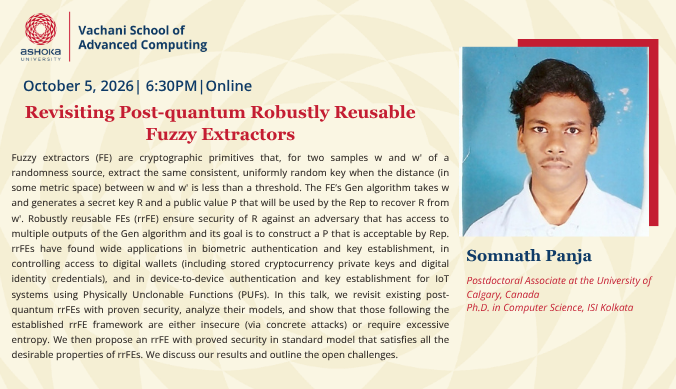
[post_title] => Seminar| Revisiting Post-quantum Robustly Reusable Fuzzy Extractors
[post_excerpt] =>
[post_status] => publish
[comment_status] => closed
[ping_status] => closed
[post_password] =>
[post_name] => seminar-revisiting-postquantum-robustly-reusable-fuzzy-extractors
[to_ping] =>
[pinged] =>
[post_modified] => 2026-10-01 07:43:59
[post_modified_gmt] => 2026-10-01 07:43:59
[post_content_filtered] =>
[post_parent] => 0
[guid] => https://www.ashoka.edu.in?post_type=tribe_events&p=100772
[menu_order] => 0
[post_type] => tribe_events
[post_mime_type] =>
[comment_count] => 0
[filter] => raw
)
)
[post_count] => 1
[current_post] => -1
[before_loop] => 1
[in_the_loop] =>
[post] => WP_Post Object
(
[ID] => 100772
[post_author] => 1
[post_date] => 2026-10-01 07:43:59
[post_date_gmt] => 2026-10-01 07:43:59
[post_content] =>
[post_title] => Seminar| Revisiting Post-quantum Robustly Reusable Fuzzy Extractors
[post_excerpt] =>
[post_status] => publish
[comment_status] => closed
[ping_status] => closed
[post_password] =>
[post_name] => seminar-revisiting-postquantum-robustly-reusable-fuzzy-extractors
[to_ping] =>
[pinged] =>
[post_modified] => 2026-10-01 07:43:59
[post_modified_gmt] => 2026-10-01 07:43:59
[post_content_filtered] =>
[post_parent] => 0
[guid] => https://www.ashoka.edu.in?post_type=tribe_events&p=100772
[menu_order] => 0
[post_type] => tribe_events
[post_mime_type] =>
[comment_count] => 0
[filter] => raw
)
[comment_count] => 0
[current_comment] => -1
[found_posts] => 1
[max_num_pages] => 1
[max_num_comment_pages] => 0
[is_single] =>
[is_preview] =>
[is_page] =>
[is_archive] => 1
[is_date] =>
[is_year] =>
[is_month] =>
[is_day] =>
[is_time] =>
[is_author] =>
[is_category] =>
[is_tag] => 1
[is_tax] =>
[is_search] =>
[is_feed] =>
[is_comment_feed] =>
[is_trackback] =>
[is_home] =>
[is_privacy_policy] =>
[is_404] =>
[is_embed] =>
[is_paged] =>
[is_admin] =>
[is_attachment] =>
[is_singular] =>
[is_robots] =>
[is_favicon] =>
[is_sitemap] =>
[is_posts_page] =>
[is_post_type_archive] => 1
[query_vars_hash:WP_Query:private] => 39af6bd94ec35e19338b4e65c2bbffd0
[query_vars_changed:WP_Query:private] => 1
[thumbnails_cached] =>
[allow_query_attachment_by_filename:protected] =>
[stopwords:WP_Query:private] =>
[compat_fields:WP_Query:private] => Array
(
[0] => query_vars_hash
[1] => query_vars_changed
)
[compat_methods:WP_Query:private] => Array
(
[0] => init_query_flags
[1] => parse_tax_query
)
[query_cache_key:WP_Query:private] => wp_query:4e2253ffcf876e75fac7af3d72a6e15e
[tribe_is_event] => 1
[tribe_is_multi_posttype] =>
[tribe_is_event_category] =>
[tribe_is_event_venue] =>
[tribe_is_event_organizer] =>
[tribe_is_event_query] => 1
[tribe_is_past] =>
)
News
In this article, we explore why high-performing JEE Main students are looking beyond traditional Indian engineering universities for Computer Science…
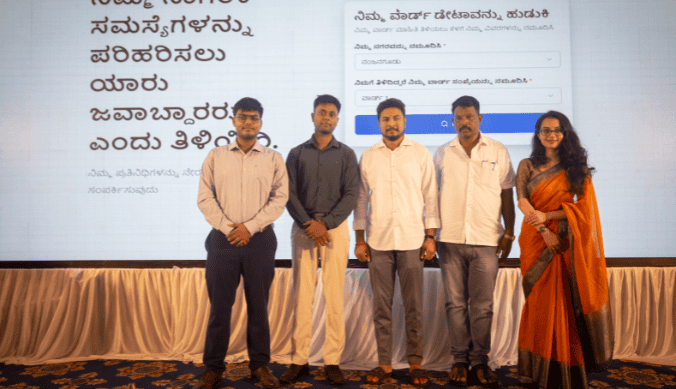
Civinc, developed by Ashoka alumna Aishwarya Sunaad, connects citizens with municipal officials, making governance more transparent and efficient.
Vaibhav Shokeen, a fourth-year student at Ashoka University, chronicles his field visit to Nigeria and shares insights from his work…
Ashoka University and the University of Cambridge explores how technology is reshaping our final moments—and what comes after.
The advent of agentic frameworks supported underneath by Large Language Models, is changing the way marketing teams operate.
Prashant Agrawal, Research Assistant at Ashoka’s Centre for Digitisation, AI, and Society, along with his co-authors, has proposed a protocol…
The Computer Science department at Ashoka University has a solid foundation to tackle novel questions around safe and ethical design…
Prof. Debayan Gupta tells us how to process data without ever revealing it. Various military organisations and governments have already…
The Department of Computer Science at Ashoka University is designing innovative research programmes to increase the number of students from…
Once confined to military, diplomatic, and governmental spheres, cryptography has now emerged as the pivotal cornerstone in realizing security within…