

Other links:

Other links:

Department of Physics

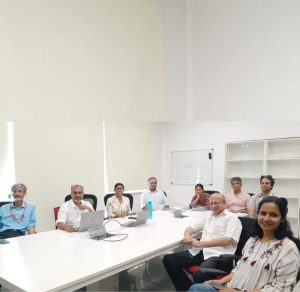
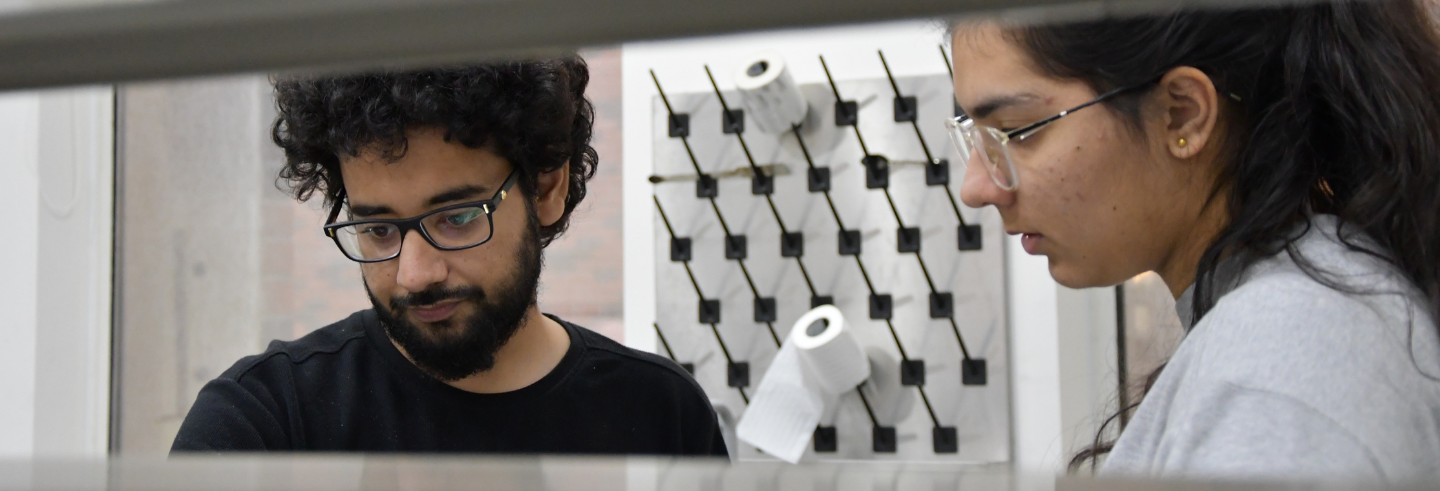
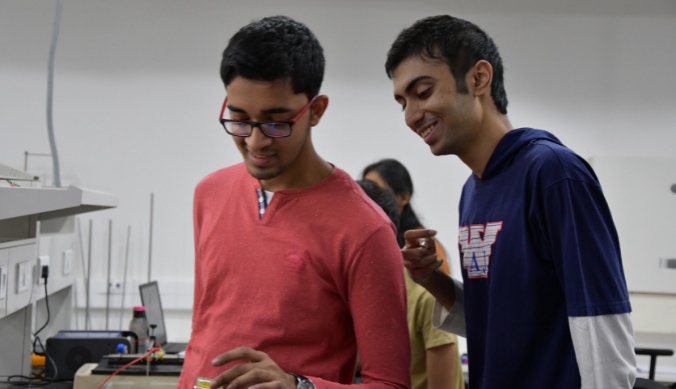
The department of physics started in 2017 and has been growing in size and scope to encompass a number of contemporary research areas. Our key focus research areas currently are Condensed Matter Physics (Soft and Hard), Biophysics, Astrophysics, Cosmology and Quantum Field theory. Please refer to the faculty profile pages for more information on the research interests of our faculty members.

We have a PhD program in physics where we aim to select motivated and committed students with a passion for research and to train them to be active and independent researchers.

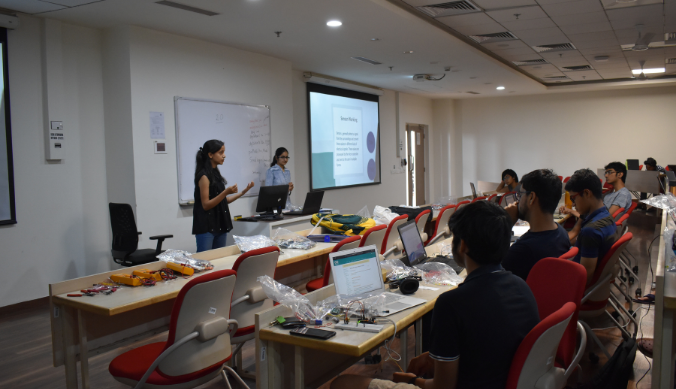
Our undergraduate physics program provides a solid grounding  in the traditional core undergraduate physics curriculum and also an opportunity for students to pursue more eclectic interests in the sciences or beyond. Besides pursuing higher studies in physics, students get the necessary training and skills which can be used in other scientific fields and interdisciplinary endeavors.

The details of courses (graduate and undergraduate) taught at the physics department can be found here.
Programmes

Physics Faculty

The department of Physics has faculty members working on a wide rage of topics including Theoretical Condensed Matter Physics, Soft Matter Systems, Biophysics, Cosmology and Quantum Field Theory.
Astrophysics and Cosmology (Theoretical/Observational/Computational)

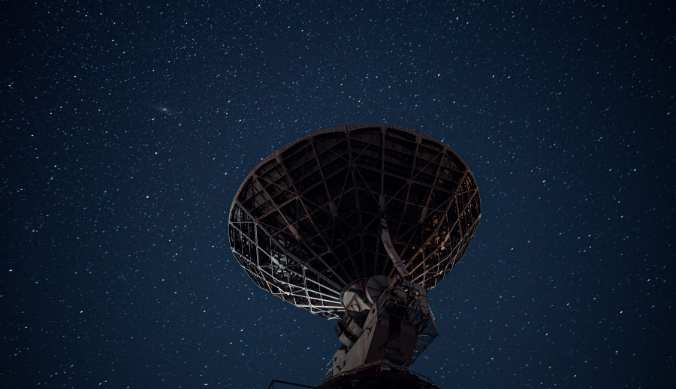
Astrophysics is a branch of space science that uses the principles of physics and chemistry to understand the universe. It explores the birth, life, and death of stars, galaxies, planets, and other cosmic objects, as well as the fundamental nature of space and time. Cosmology is a branch of physics and metaphysics dealing with the nature of the universe, the cosmos.The aim of cosmology is to apply laws of physics to the universe as a whole. Observations tell us that the universe is neither eternal nor static, and therefore it raises questions as to when and how did the universe start? What did it look like in the past? How will it evolve in the future? Astrophysics is closely related to astronomy and cosmology, often working in collaboration to address complex questions about the universe.
Quantum Physics (Theoretical)

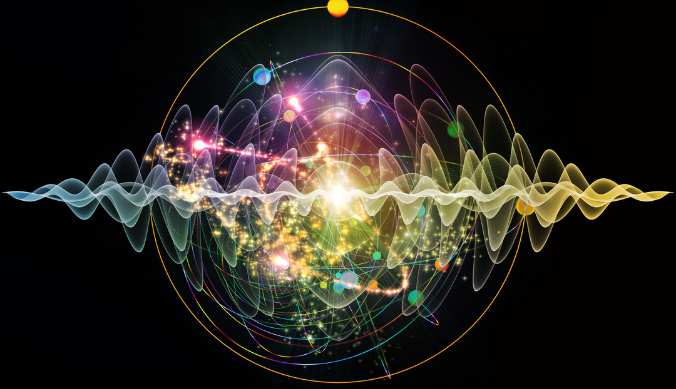
Quantum Field theory is a well-tested framework describing nature across a wide range of length / energy scales, with diverse applications across Particle Physics, Cosmology, Condensed Matter Physics and other areas of physics. Within this domain, the work in the department has focussed on Conformal Quantum Field Theories of different kinds - relativistic, non-relativistic and supersymmetric. Also under active investigation are topics spanning Quantum information and Quantum many-body theory. In particular, recent work has focussed on quantum complexity measures with a view towards the study of chaos in non-integrable quantum dynamics.
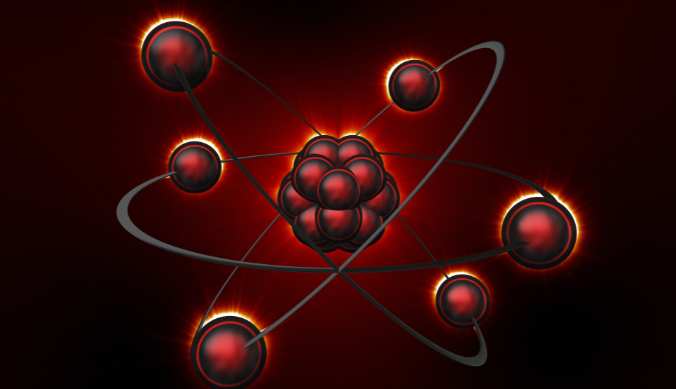
Condensed Matter Physics and Biophysics

Research in condensed matter physics explores the physical properties of matter in regimes where the interactions between constituent particles are significant enough to lead to collective behaviour. Modern condensed matter physics, both experimental and theoretical, includes quantum mechanical systems as well as systems that can be understood largely through classical physics. It includes the study of magnetism, semiconductors and superconductors, focusing on elucidating fundamental phenomena including collective excitations, topological order, and quantum phase transitions. Soft condensed matter physics, sometimes called the physics of complex fluids, investigates materials that are easily deformable. Such systems exhibit novel and often nonlinear flow properties. They include polymers, colloids, gels, fluids and liquid crystals. These can be modeled using tools of statistical mechanics.
WP_Query Object
(
    [query] => Array
        (
            [post_type] => tribe_events
            [posts_per_page] => 5
            [post_status] => publish
            [orderby] => Array
                (
                    [post_date] => ASC
                    [tec_event_start_date] => ASC
                )

            [order] => DESC
            [tax_query] => Array
                (
                    [0] => Array
                        (
                            [taxonomy] => post_tag
                            [field] => term_id
                            [terms] => 2172
                        )

                )

            [meta_query] => Array
                (
                    [tec_event_start_date] => Array
                        (
                            [key] => _EventStartDate
                            [compare] => EXISTS
                        )

                    [tec_event_end_date] => Array
                        (
                            [key] => _EventEndDate
                            [value] => 2026-01-21 02:44:37
                            [compare] => >=
                            [type] => DATETIME
                        )

                )

        )

    [query_vars] => Array
        (
            [post_type] => tribe_events
            [posts_per_page] => 5
            [post_status] => publish
            [orderby] => Array
                (
                    [post_date] => ASC
                    [tec_event_start_date] => ASC
                )

            [order] => DESC
            [tax_query] => Array
                (
                    [0] => Array
                        (
                            [taxonomy] => post_tag
                            [field] => term_id
                            [terms] => 2172
                        )

                )

            [error] => 
            [m] => 
            [p] => 0
            [post_parent] => 
            [subpost] => 
            [subpost_id] => 
            [attachment] => 
            [attachment_id] => 0
            [name] => 
            [pagename] => 
            [page_id] => 0
            [second] => 
            [minute] => 
            [hour] => 
            [day] => 0
            [monthnum] => 0
            [year] => 0
            [w] => 0
            [category_name] => 
            [tag] => 
            [cat] => 
            [tag_id] => 2172
            [author] => 
            [author_name] => 
            [feed] => 
            [tb] => 
            [paged] => 0
            [meta_key] => 
            [meta_value] => 
            [preview] => 
            [s] => 
            [sentence] => 
            [title] => 
            [fields] => all
            [menu_order] => 
            [embed] => 
            [category__in] => Array
                (
                )

            [category__not_in] => Array
                (
                )

            [category__and] => Array
                (
                )

            [post__in] => Array
                (
                )

            [post__not_in] => Array
                (
                )

            [post_name__in] => Array
                (
                )

            [tag__in] => Array
                (
                )

            [tag__not_in] => Array
                (
                )

            [tag__and] => Array
                (
                )

            [tag_slug__in] => Array
                (
                )

            [tag_slug__and] => Array
                (
                )

            [post_parent__in] => Array
                (
                )

            [post_parent__not_in] => Array
                (
                )

            [author__in] => Array
                (
                )

            [author__not_in] => Array
                (
                )

            [search_columns] => Array
                (
                )

            [meta_query] => Array
                (
                    [tec_event_start_date] => Array
                        (
                            [key] => _EventStartDate
                            [compare] => EXISTS
                        )

                    [tec_event_end_date] => Array
                        (
                            [key] => _EventEndDate
                            [value] => 2026-01-21 02:44:37
                            [compare] => >=
                            [type] => DATETIME
                        )

                )

            [ignore_sticky_posts] => 
            [suppress_filters] => 
            [cache_results] => 1
            [update_post_term_cache] => 1
            [update_menu_item_cache] => 
            [lazy_load_term_meta] => 1
            [update_post_meta_cache] => 1
            [nopaging] => 
            [comments_per_page] => 50
            [no_found_rows] => 
        )

    [tax_query] => WP_Tax_Query Object
        (
            [queries] => Array
                (
                    [0] => Array
                        (
                            [taxonomy] => post_tag
                            [terms] => Array
                                (
                                    [0] => 2172
                                )

                            [field] => term_id
                            [operator] => IN
                            [include_children] => 1
                        )

                )

            [relation] => AND
            [table_aliases:protected] => Array
                (
                    [0] => wp_term_relationships
                )

            [queried_terms] => Array
                (
                    [post_tag] => Array
                        (
                            [terms] => Array
                                (
                                    [0] => 2172
                                )

                            [field] => term_id
                        )

                )

            [primary_table] => wp_posts
            [primary_id_column] => ID
        )

    [meta_query] => WP_Meta_Query Object
        (
            [queries] => Array
                (
                    [tec_event_start_date] => Array
                        (
                            [key] => _EventStartDate
                            [compare] => EXISTS
                        )

                    [tec_event_end_date] => Array
                        (
                            [key] => _EventEndDate
                            [value] => 2026-01-21 02:44:37
                            [compare] => >=
                            [type] => DATETIME
                        )

                    [relation] => AND
                )

            [relation] => AND
            [meta_table] => wp_postmeta
            [meta_id_column] => post_id
            [primary_table] => wp_posts
            [primary_id_column] => ID
            [table_aliases:protected] => Array
                (
                    [0] => wp_postmeta
                    [1] => mt1
                )

            [clauses:protected] => Array
                (
                    [tec_event_start_date] => Array
                        (
                            [key] => _EventStartDate
                            [compare] => EXISTS
                            [compare_key] => =
                            [alias] => wp_postmeta
                            [cast] => CHAR
                        )

                    [tec_event_end_date] => Array
                        (
                            [key] => _EventEndDate
                            [value] => 2026-01-21 02:44:37
                            [compare] => >=
                            [type] => DATETIME
                            [compare_key] => =
                            [alias] => mt1
                            [cast] => DATETIME
                        )

                )

            [has_or_relation:protected] => 
        )

    [date_query] => 
    [request] => SELECT SQL_CALC_FOUND_ROWS  wp_posts.ID
					 FROM wp_posts  LEFT JOIN wp_term_relationships ON (wp_posts.ID = wp_term_relationships.object_id) INNER JOIN wp_postmeta ON ( wp_posts.ID = wp_postmeta.post_id )  INNER JOIN wp_postmeta AS mt1 ON ( wp_posts.ID = mt1.post_id )
					 WHERE 1=1  AND ( 
  wp_term_relationships.term_taxonomy_id IN (2177)
) AND ( 
  wp_postmeta.meta_key = '_EventStartDate' 
  AND 
  ( mt1.meta_key = '_EventEndDate' AND CAST(mt1.meta_value AS DATETIME) >= '2026-01-21 02:44:37' )
) AND wp_posts.post_type = 'tribe_events' AND ((wp_posts.post_status = 'publish'))
					 GROUP BY wp_posts.ID
					 ORDER BY wp_posts.post_date ASC, CAST(wp_postmeta.meta_value AS CHAR) ASC
					 LIMIT 0, 5
    [posts] => Array
        (
            [0] => WP_Post Object
                (
                    [ID] => 88418
                    [post_author] => 1
                    [post_date] => 2026-01-13 10:41:25
                    [post_date_gmt] => 2026-01-13 10:41:25
                    [post_content] => 

Abstract: Spin current, which represents a flow of angular momentum, has garnered significant attention for its role in magnetization manipulation within spintronic devices. Several established methods are used to generate spin current, including nonlocal spin injection,[1],[2] spin pumping,[3],[4] spin Hall effect (SHE) and Rashba–Edelstein effect.[5]-[6] The spin transfer torque (STT) induced by spin current has become a key mechanism in the development of STT-based magnetic random access memory (MRAM), which holds promise as a replacement for conventional memory technologies such as DRAM. More recently, spin–orbit torque (SOT)—a form of STT mediated by the SHE—has attracted growing interest, driven by both the pursuit of deeper understanding of the underlying physics and the potential for technological breakthroughs in next-generation magnetic memory and logic devices.[7]-[9] In this seminar, I will present the fundamental mechanisms and experimental techniques related to spin current generation, STT, SHE, and SOT, highlighting their implications for future spintronic applications. 
References:
[1] Y. Fukuma, L. Wang, H. Idzuchi, S. Takahashi, S. Maekawa, Y. Otani, Nature Materials, 10, 527(2011).
[2] K. Fujiwara, Y. Fukuma, J. Matsuno, H. Idzuchi, Y. Niimi, Y. Otani, H. Takagi, Nature Communications, 4, 2893(2013).
[3] S. Gupta, R. Medwal, D. Kodama, K. Kondou, Y. Otani, Y. Fukuma, Applied Physics Letters, 110, 22404(2017).
[4] R. Medwal, S. Gupta, R. S. Rawat, A. Subramanian, Y. Fukuma, Physica Status Solidi-Rapid Research Letters, 1900267 (2019).
[5] K. Kondou, R. Yoshimi, A. Tsukazaki, Y. Fukuma, J. Matsuno, K. S. Takahashi, M. Kawasaki, Y. Tokura, Y. Otani, Nature Physics, 12, 527(2016).
[6] U. Shashank, R. Medwal, Y. Nakamura, J. R. Mohan, R. Nongjai, K. Asokan, R. S. Rawat, H. Asada, S. Gupta, Y. Fukuma, Advanced Quantum Technologies, 4, 2000112(2021).
[7] U. Shashank, T. Tomoda, A. J. Mathew, G. Vashisht, K. Imai, Y. Kusaba, C.-L. Dong, C.-L. Chen, Y. Horibe, M. Ishimaru, H. Awano, H. Asada, Y. Fukuma, NPG Asia Materials, 17, 15 (2025).
[8] A. J. Mathew, J. R. Mohan, C. Yamanaka, K. Shintaku, M. Mohammadi, H. Awano, H. Asada, Y. Fukuma, Applied Physics Letters, 126, 082405 (2025).
[9] K. Shintaku, A. J. Mathew, A. Iwamoto, M. Mohammadi, H. Awano, H. Asada, Y. Fukuma, Applied Physics Letters, 127, 012410 (2025).

About the Speaker: Prof. Yasuhiro Fukuma received his PhD in Material Science from Yamaguchi University (Japan) in 2002. After research positions at Yamaguchi Prefectural Industrial Technology Institute (Japan), University of Alabama (USA), RIKEN (Japan), he jointed at Kyushu Institute of Technology in 2012. He has been working on spintronic technology for the last 29 years, and published over 100 peer-reviewed journal papers and holds 7 patents. His main project is recently related to spin Hall effect and its memory and neuromorphic computing applications.

We look forward to you active participation.

[post_title] => Physics Colloquium [post_excerpt] => [post_status] => publish [comment_status] => closed [ping_status] => closed [post_password] => [post_name] => physics-colloquium [to_ping] => [pinged] => [post_modified] => 2026-01-13 11:33:17 [post_modified_gmt] => 2026-01-13 11:33:17 [post_content_filtered] => [post_parent] => 0 [guid] => https://www.ashoka.edu.in?post_type=tribe_events&p=88418 [menu_order] => 0 [post_type] => tribe_events [post_mime_type] => [comment_count] => 0 [filter] => raw ) [1] => WP_Post Object ( [ID] => 88420 [post_author] => 1 [post_date] => 2026-01-13 10:41:35 [post_date_gmt] => 2026-01-13 10:41:35 [post_content] =>

Abstract: I shall tell you in a nutshell, in a nontechnical fashion, and from a historical perspective,  about the development of a few fundamental concepts of physics over the last century, and how they led to the prediction of the Higgs boson -- the so called 'God Particle' -- which was eventually discovered in 2012 at the CERN LHC.

About the Speaker:  Prof. Gautam Bhattacharyya is the Former Director of Saha Institute of Nuclear Physics, Kolkata. He is a particle phenomenologist and his research is Phenomenology of the Standard Model and beyond (e.g., Supersymmetry, Extra Dimensions, Composite Higgs, GUT); Neutrino and Flavor Physics and their interplay with Collider results. Prof. Bhattacharyya is J.C. Bose National Fellowship, SERB-DST, Govt. of India (2017-22), Fellow of the Indian Academy of Sciences (IASc), Bangalore (2015), Fellow of the Indian National Science Academy (INSA), New Delhi (2013) and Allahabad (2013), and many other accolades. 

We look forward to your active participation.

[post_title] => Physics Colloquium [post_excerpt] => [post_status] => publish [comment_status] => closed [ping_status] => closed [post_password] => [post_name] => physics-colloquium [to_ping] => [pinged] => [post_modified] => 2026-01-13 11:38:53 [post_modified_gmt] => 2026-01-13 11:38:53 [post_content_filtered] => [post_parent] => 0 [guid] => https://www.ashoka.edu.in?post_type=tribe_events&p=88420 [menu_order] => 0 [post_type] => tribe_events [post_mime_type] => [comment_count] => 0 [filter] => raw ) ) [post_count] => 2 [current_post] => -1 [before_loop] => 1 [in_the_loop] => [post] => WP_Post Object ( [ID] => 88418 [post_author] => 1 [post_date] => 2026-01-13 10:41:25 [post_date_gmt] => 2026-01-13 10:41:25 [post_content] =>

Abstract: Spin current, which represents a flow of angular momentum, has garnered significant attention for its role in magnetization manipulation within spintronic devices. Several established methods are used to generate spin current, including nonlocal spin injection,[1],[2] spin pumping,[3],[4] spin Hall effect (SHE) and Rashba–Edelstein effect.[5]-[6] The spin transfer torque (STT) induced by spin current has become a key mechanism in the development of STT-based magnetic random access memory (MRAM), which holds promise as a replacement for conventional memory technologies such as DRAM. More recently, spin–orbit torque (SOT)—a form of STT mediated by the SHE—has attracted growing interest, driven by both the pursuit of deeper understanding of the underlying physics and the potential for technological breakthroughs in next-generation magnetic memory and logic devices.[7]-[9] In this seminar, I will present the fundamental mechanisms and experimental techniques related to spin current generation, STT, SHE, and SOT, highlighting their implications for future spintronic applications. 
References:
[1] Y. Fukuma, L. Wang, H. Idzuchi, S. Takahashi, S. Maekawa, Y. Otani, Nature Materials, 10, 527(2011).
[2] K. Fujiwara, Y. Fukuma, J. Matsuno, H. Idzuchi, Y. Niimi, Y. Otani, H. Takagi, Nature Communications, 4, 2893(2013).
[3] S. Gupta, R. Medwal, D. Kodama, K. Kondou, Y. Otani, Y. Fukuma, Applied Physics Letters, 110, 22404(2017).
[4] R. Medwal, S. Gupta, R. S. Rawat, A. Subramanian, Y. Fukuma, Physica Status Solidi-Rapid Research Letters, 1900267 (2019).
[5] K. Kondou, R. Yoshimi, A. Tsukazaki, Y. Fukuma, J. Matsuno, K. S. Takahashi, M. Kawasaki, Y. Tokura, Y. Otani, Nature Physics, 12, 527(2016).
[6] U. Shashank, R. Medwal, Y. Nakamura, J. R. Mohan, R. Nongjai, K. Asokan, R. S. Rawat, H. Asada, S. Gupta, Y. Fukuma, Advanced Quantum Technologies, 4, 2000112(2021).
[7] U. Shashank, T. Tomoda, A. J. Mathew, G. Vashisht, K. Imai, Y. Kusaba, C.-L. Dong, C.-L. Chen, Y. Horibe, M. Ishimaru, H. Awano, H. Asada, Y. Fukuma, NPG Asia Materials, 17, 15 (2025).
[8] A. J. Mathew, J. R. Mohan, C. Yamanaka, K. Shintaku, M. Mohammadi, H. Awano, H. Asada, Y. Fukuma, Applied Physics Letters, 126, 082405 (2025).
[9] K. Shintaku, A. J. Mathew, A. Iwamoto, M. Mohammadi, H. Awano, H. Asada, Y. Fukuma, Applied Physics Letters, 127, 012410 (2025).

About the Speaker: Prof. Yasuhiro Fukuma received his PhD in Material Science from Yamaguchi University (Japan) in 2002. After research positions at Yamaguchi Prefectural Industrial Technology Institute (Japan), University of Alabama (USA), RIKEN (Japan), he jointed at Kyushu Institute of Technology in 2012. He has been working on spintronic technology for the last 29 years, and published over 100 peer-reviewed journal papers and holds 7 patents. His main project is recently related to spin Hall effect and its memory and neuromorphic computing applications.

We look forward to you active participation.

[post_title] => Physics Colloquium [post_excerpt] => [post_status] => publish [comment_status] => closed [ping_status] => closed [post_password] => [post_name] => physics-colloquium [to_ping] => [pinged] => [post_modified] => 2026-01-13 11:33:17 [post_modified_gmt] => 2026-01-13 11:33:17 [post_content_filtered] => [post_parent] => 0 [guid] => https://www.ashoka.edu.in?post_type=tribe_events&p=88418 [menu_order] => 0 [post_type] => tribe_events [post_mime_type] => [comment_count] => 0 [filter] => raw ) [comment_count] => 0 [current_comment] => -1 [found_posts] => 2 [max_num_pages] => 1 [max_num_comment_pages] => 0 [is_single] => [is_preview] => [is_page] => [is_archive] => 1 [is_date] => [is_year] => [is_month] => [is_day] => [is_time] => [is_author] => [is_category] => [is_tag] => 1 [is_tax] => [is_search] => [is_feed] => [is_comment_feed] => [is_trackback] => [is_home] => [is_privacy_policy] => [is_404] => [is_embed] => [is_paged] => [is_admin] => [is_attachment] => [is_singular] => [is_robots] => [is_favicon] => [is_posts_page] => [is_post_type_archive] => 1 [query_vars_hash:WP_Query:private] => 28d9d934e16025c75939633888cf0ee8 [query_vars_changed:WP_Query:private] => 1 [thumbnails_cached] => [allow_query_attachment_by_filename:protected] => [stopwords:WP_Query:private] => [compat_fields:WP_Query:private] => Array ( [0] => query_vars_hash [1] => query_vars_changed ) [compat_methods:WP_Query:private] => Array ( [0] => init_query_flags [1] => parse_tax_query ) [query_cache_key:WP_Query:private] => wp_query:eeb5e09902e3f3c0aba911e0db81cbff [tribe_is_event] => 1 [tribe_is_multi_posttype] => [tribe_is_event_category] => [tribe_is_event_venue] => [tribe_is_event_organizer] => [tribe_is_event_query] => 1 [tribe_is_past] => )

News

Events

News

In the Media

Physics Colloquium

Physics Colloquium

Contact Us

For any queries regarding Physics programmes, please contact: -

Dipankar Bhattacharya

Head of Department

hod.phy@ashoka.edu.in

Garima Mishra

UG Course Coordinator

garima.mishra@ashoka.edu.in

Suratna Das

Ph.D. Programme Coordinator

suratna.das@ashoka.edu.in

Susmita Saha

Colloquium Coordinator

susmita.saha@ashoka.edu.in

Hiyaa Atreya

UG Student Representative

phys.rep@ashoka.edu.in

Study at Ashoka

Study at Ashoka

Sticky Button