


Other links:


Other links:




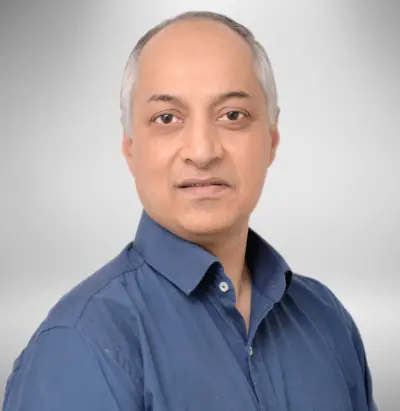
Professor, Computer Science, Ashoka University
PhD Stony Brook University
Sanjiva Prasad is a Professor and former Head of the Department of Computer Science and Engineering (2018-2021, 2024) and former Head of the Amar Nath and Shashi Khosla School of Information Technology (2011-2015) at the Indian Institute of Technology Delhi. His research interests include formal methods, programming languages and their semantics, security of information flow and networks, and medical applications of computing. He has written several conference and journal papers in these areas, served on the technical programme committees of several international conferences, and delivered seminar talks at leading universities across the world. He was Editor-in-Chief of ACM Books (www.books.acm.org) in the period 2019-2025 and Chair of the executive committee of the Association for Logic in India.
Prof. Prasad was Head of IIT Delhi’s School of Public Policy (2022-24) His research interests in this area concern issues regarding data and computation, and their confidentiality and integrity, in particular health-related data systems. He is also interested in issues of higher education, pedagogical processes and affordable access to educational materials.
Prior to working at IIT Delhi, Prof. Prasad worked on program verification at Odyssey Research Associates in Ithaca, USA from 1990-1992, and then at the European Computer-Industry Research Center (ECRC GmbH) in Munich, Germany from 1992-1994 on the Facile project which was based on his dissertation. He was a visiting Lektor at BRICS, Aarhus University from 1998 to 1999. His PhD is from Stony Brook University, New York, and he earned a BTech in Computer Science and Engineering from the Indian Institute of Technology Kanpur in 1985.
Logical Synchrony Plus Functional Processes Entail Observable Determinacy. Sanjiva Prasad. Proceedings of MEMOCODE 2024, pp 63:68 (Invited paper).
Secure Information Flow Connections. Chandrika Bhardwaj, Sanjiva Prasad. Journal of Logical and Algebraic Methods in Programming, 127. Elsevier, June 2022. (Preprint on arXiv. https://arxiv.org/abs/2011.03319 2020.)) [operational semantics, formal methods]
DHOOM: Reusing Design-for-Debug Hardware for Online Monitoring. Neetu Jindal, Sandeep Chandran, Preeti Ranjan Panda, Sanjiva Prasad, Abhay Mitra, Kunal Singhal, Shubham Gupta, Shikhar Tuli. Proceedings of the 56th Annual Design Automation Conference 2019, DAC 2019. Pages 99:1-99:6, ACM. Las Vegas, NV, USA. June 2019 [reconfigurable architecture, runtime verification]
Best-by-simulations: A framework for comparing efficiency of reconfigurable architectures on workloads with deadlines. Sanjiva Prasad. Journal of Logical and Algebraic Methods in Programming, 100:1-15, Elsevier, November 2018. [operational semantics, formal methods]
prasavGraph: Android based Labour Monitoring. Shalini Singh, Kolin Paul, Geeta Yadav, Sanjiva Prasad. 9th International Joint Conference on Biomedical Engineering Systems and Technologies (BIOSTEC 2016), Rome, February 2016. [healthcare]
A Modular Android-Based Multi-sensor mHealth System. Avval Gupta, Anju Kansal, Kolin Paul, Sanjiva Prasad. Revised Selected Papers from the 7th International Joint Conference on Biomedical Engineering Systems and Technologies (BIOSTEC 2014), Springer, 2015. [healthcare, mobile sensors]
ReKonf: Dynamically reconfigurable multiCore architecture. Rajesh Kumar Pal, Kolin Paul, Sanjiva Prasad. Journal of Parallel & Distributed Computing, vol 74 (11), 2014. [architecture]
ABC: An Axiomatic Basis of Communication. Martin Karsten, Srinivasan Keshav, Sanjiva Prasad, M. Beg. ACM Sigcomm 2007. [network architectures, formal methods]
Effective Chemistry for Synchrony and Asynchrony. Deepak Garg, Akash Lal, Sanjiva Prasad. IFIP WCC-TCS 2004, August 2004, Toulouse, France. [concurrency, process calculi, operational semantics]
Reflecting BDDs in Coq. Kumar Neeraj Verma, Jean Goubault-Larrecq, Sanjiva Prasad, S. Arun-Kumar. Extended abstract appears in Proceedings of ASIAN’00, Penang, Malaysia, Springer LNCS volume 1961, pages 162-181, November 2000. [verification]
Modelling IP Mobility. Roberto Amadio, Sanjiva Prasad. Journal of Formal Methods in System Design, volume 17(1), August 2000. [process calculi,networks,verification]
The Game of the Name in Cryptographic Tables. Roberto Amadio, Sanjiva Prasad. Proceedings of ASIAN’99, Phuket, Thailand, Springer LNCS volume 1742, pages 15–26, December 1999. [process calculi,security,verification]
Localities and Failures (Extended Abstract). Roberto M. Amadio, Sanjiva Prasad. FSTTCS 1994: 205-216. LNCS. [concurrency theory, distributed systems, programming languages]
Verification of numerical programs using Penelope/Ariel. Sanjiva Prasad. Systems Integrity, Software Safety and Process Security: Building the System Right., Proceedings of the Seventh Annual Conference on Computer Assurance (COMPASS ’92), page 11-24. June 1992. [verification]
Operational and Algebraic Semantics for Facile: A Symmetric Integration of Concurrent and Functional Programming. Sanjiva Prasad, Alessandro Giacalone, Prateek Mishra. ICALP 1990: 765-778. LNCS. [concurrency theory, programming languages]
Facile: A symmetric integration of concurrent and functional programming. Alessandro Giacalone, Prateek Mishra, Sanjiva Prasad. International Journal of Parallel Programming 18(2): 121-160 (1989) [concurrency theory, programming languages]
Logical Synchrony Induced Determinacy For Distributed Systems. Research Award, Google Asia Pacific Pvt Ltd. USD 30,000. 2025.
HelpNets: Wireless Network Architectures using Asynchronous Messages for Supporting Development Activities in Severely Underserved Communities. Microsoft Research, Microsoft India (R&D) Pvt. Ltd., April 2004. Unrestricted personal grant. INR 1,738,900.
Protocol Verification for Mobile Systems. Sun Microsystems Inc., USA. Feb 2001. INR 957,600
Logic-based program analysis. AICTE Career Award for Young Faculty. 1997-2000. INR 800,000
Courses Taught at IIT Delhi (1994-present) (partial list)
* Introduction to Computers and Programming
* Introduction to Computer Science
* Introduction to Logic for Computer Science
* Programming Languages
^ Compiler Design
* Operating Systems
^ Introduction to Logic and Functional Programming
# Distributed Computing
# Proofs and Types
# Semantics of Programming Languages
# Special Topics in Programming Systems
# Special Topics in Theoretical Computer Science (Automated Deduction)
^ Foundations of Automatic Verification
# Special Topics in Concurrency
^ Software Engineering
* Software Systems Laboratory
# Special Module in Software Systems
# Special Module in Concurrency (Synchronous Systems)
# Special Module in Information Security (Information Flow)


