





Charting New Paths: A Deep Dive Inside Ashoka Young Scholars Programme 2025
Ashoka University's YSP 2025 brought 1,500+ high schoolers together for a summer of academic discovery and transformative learning.
 5
5 
India’s leading summer programme, Ashoka Young Scholars Programme 2025 (YSP), was held in 2 editions in the months of May and June on the Ashoka University campus. High school students entering grades 9-12 across the country converged to have a transformational summer. The certified residential programme is designed to give exposure to a liberal arts & sciences education at the university level.
The 2025 cohort of the Young Scholars Programme (YSP) brought together a remarkably diverse and talented group of approximately 1,500 students, including 60+ students from diverse schools. Applications were received from 650+ schools, 130+ cities and 4 countries – including India, Qatar, Singapore and the United Arab Emirates. Some of the top schools included La Martiniere for Boys and Girls, Kolkata, The Shri Ram School Aravali, Gurugram, Step by Step School, Noida, Oberoi International School, Mumbai, Mallya Aditi International School, Bengaluru, VidyaGyan Sitapur and Bulandshahr, Sobha Icon, Pallakd and United World College SouthEast Asia, Singapore, to name a few.
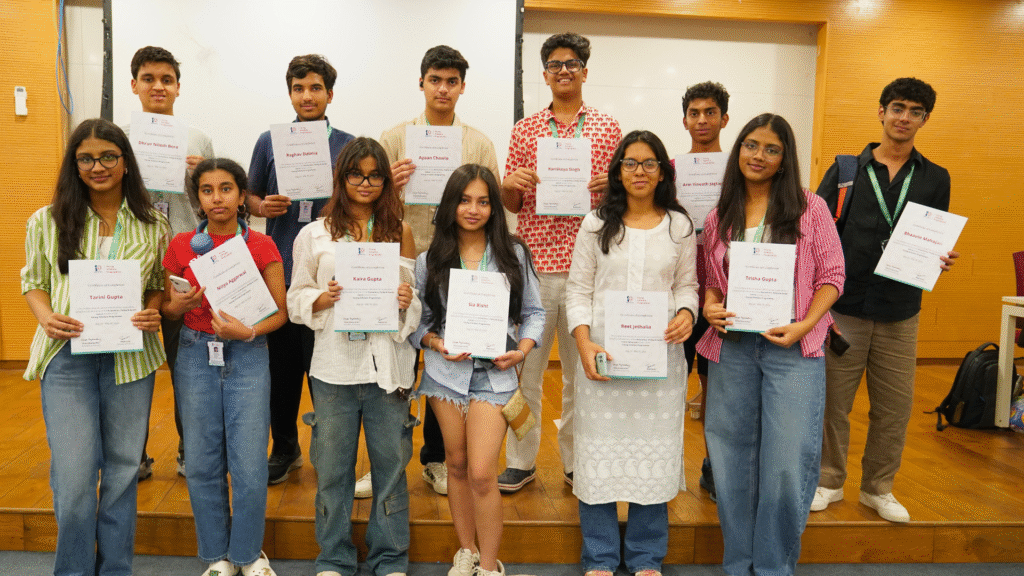
The admissions process of the Young Scholars Programme is highly selective, based on a holistic review of each applicant. Students are required to fill out an online application that gives the selection committee a well-rounded view of who they are, not just as students, but as individuals. While academic performance is an important component, equal weightage is given to co-curricular achievements, personal interests, and the essays students submit. These essays evaluate the applicant’s thought process, self-awareness, and creativity. The goal is to build a diverse and dynamic cohort of young scholars who are eager to learn, share, and grow.
“These students are very diverse and come from different backgrounds and perspectives. The kinds of questions they ask often make me think about things I might not have considered. Having interacted with so many of them, I believe that just as they have something to learn from me, I, too, have something to learn from them. The best part about YSP is that these students get to come together, stay together, and learn from each other.” – Aalok Thakkar, Assistant Professor of Computer Science, Ashoka University
The Young Scholars Programme curriculum is rooted in Ashoka’s core values of interdisciplinarity, critical thinking, and academic rigour. In each edition, students engage with sessions on topics like Sciences to Economics, Technology and Data Sciences to Psychology, Computational Thinking to Design Thinking, Navigating FOMO to Writing with Impact.
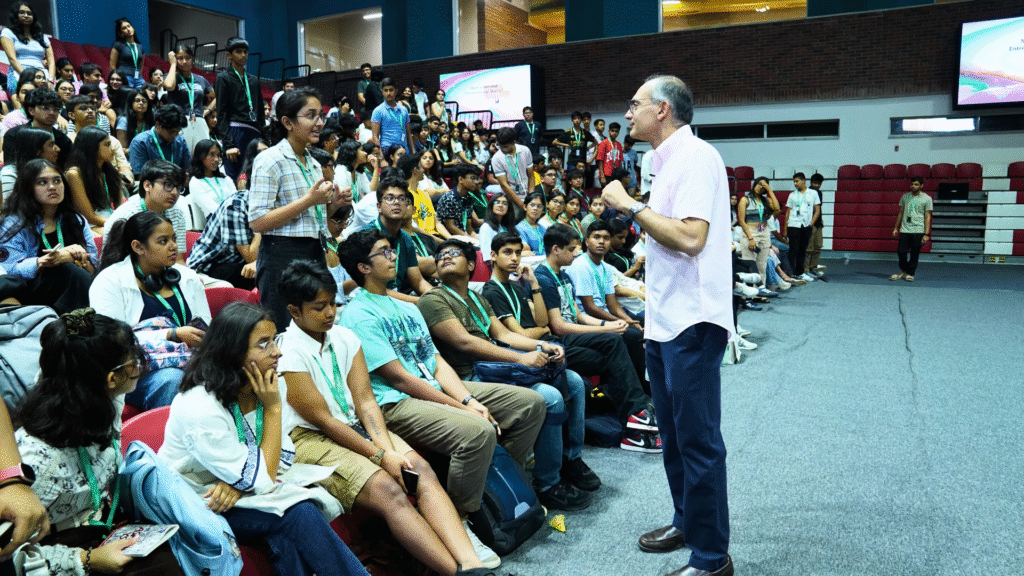
The format mirrors university seminars: classes are discussion-led, fast-paced, and focused on helping students think critically, develop essential skills, and gain perspectives that will set them apart as they navigate subject choices, college choices, and life beyond.
This year’s edition featured seven interdisciplinary programmes that combined academic exploration with hands-on lab sessions and 21st-century skills workshops. For the first time, YSP introduced two new programmes- Psychology, Behaviour and Well-Being (PBW) and Impact Leaders of Tomorrow (ILT). The full range included the Foundation Programme (FP), Innovators in Science & Technology (IST), Tech, Data and Computer Science (TDCS), Entrepreneurship, Business and Leadership (EBL) and Economics, Policy and Governance (EPG). There was something for everyone at YSP 2025.
“We didn’t want to just teach them basic Python and coding; the goal was to offer something more meaningful. We encouraged participants to engage with hardware and technology in ways that connected to their everyday lives and the world around them.” – Sai, Kanishk, and Deepraj, Makerspace Leads, Ashoka University
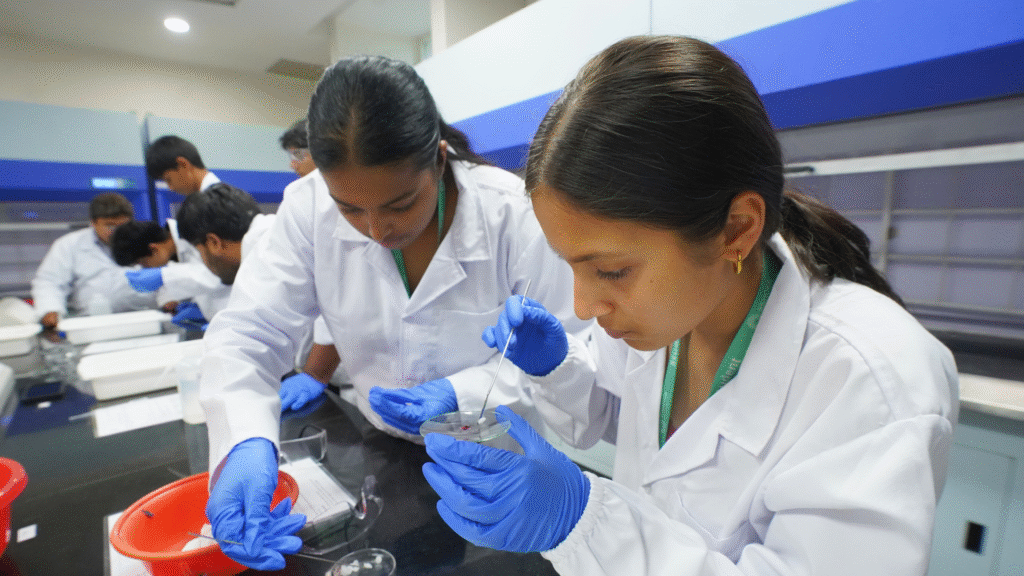
The STEM programmes, Innovators in Science & Technology (IST) and Tech, Data and Computer Science (TDCS), were 2 weeks long and offered a blend of theory, practical and experiential exploration. In IST, students rotate through biology, chemistry, physics labs and MakerSpace workshops. From examining the genetic traits of Drosophila (fruit flies) to troubleshooting mysterious electrical circuits or exploring Conway’s Game of Life, a simple simulation teaching coding, logic, and patterns. Students built their own interactive designs in JavaScript and shared them in a digital gallery. Additionally, in MakerSpace sessions, students explored technology and systems thinking through fun, collaborative projects. In the TDCS module, students learned to build basic peer-to-peer networks. They used small hardware devices called ESPs. Working in teams, they created communication tools.
Throughout the program, students interacted with thought leaders who influence global ideas and innovation. From Nobel Laureates to pioneering entrepreneurs, the speaker sessions offered knowledge and fresh perspectives.
- The YSP inspiring speaker series features voices from many fields, helping students link academic concepts to real-world impact. Some of this year’s speakers included:
- Prof. Rudrangshu Mukherjee, Chancellor and Professor of History, Ashoka University, D.Phil., Oxford University
- Professor Somak Raychaudhury, Vice-Chancellor and Professor of Physics, Ashoka University
- Pramath Raj Sinha, Chairperson of the Board of Trustees, Ashoka University; Founder and MD of Harappa Education; Founder and MD of 9.9 Group; Founding Dean of ISB; Visiting Faculty at Young India Fellowship
- Deep Kalra, Founder of MakeMyTrip
- Dr Brian Schmidt, Nobel Prize in Physics (2011) and Distinguished Professor in Astronomy, Australian National University
- Dr Paul Nurse, Nobel Prize in Physiology or Medicine (2001)
- Sharmila Bhattacharya, Lead for Science and Technology Utilization for Space Exploration at the Center Director’s Office at NASA Ames Research Center
- Dr Avantika Tomar, Partner, Education, EY-Parthenon India
“The YSP programme helps students understand the broader world of what is to come beyond school – what a college or university education truly holds for them. It offers a window into the future, giving them firsthand experience of what a college classroom, campus, and hostel life are like. It places them in an environment where they are suddenly surrounded by students from different parts of the country. I think it’s a great segue into college. I would advocate that every student who gets the opportunity should attend this programme.” Pramath Raj Sinha, Chairperson of the Board of Trustees, Ashoka University
“YSP is very special to Ashoka. One of the key reasons we conceived of the programme was because there is a significant gulf between the pedagogy and teaching methods used in most Indian schools and those we follow at Ashoka. We want to show the students who come to YSP that there is a different and far more exciting way of learning. This applies not just to history, but to any subject. Learning, at its core, is also a process of developing individual critical thinking. That’s why we aim to reach students early and expose them to these new methods – methods they will continue to experience if they choose to study at Ashoka.” Rudrangshu Mukherjee, Chancellor and Professor of History, Ashoka University
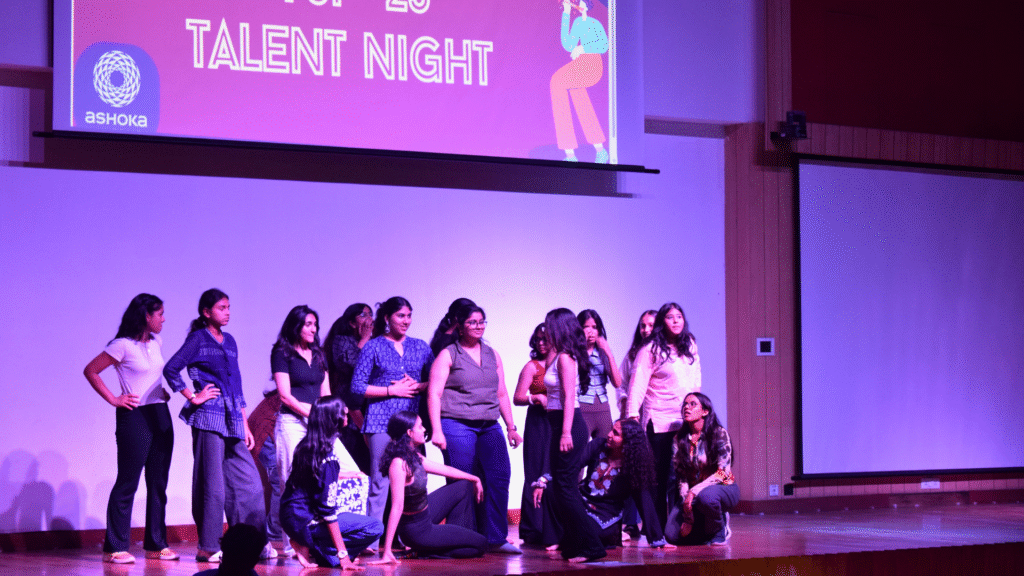
After mornings filled with critical thinking and problem-solving, YSP evenings provide a chance to unwind. Students enjoy improv workshops, music jam sessions, group sports, and talent night performances. They take part in fun initiatives like “Kabootar Jaa,” where they send appreciation notes to faculty and peers. Another activity, “Chaat & Chat,” lets students bond over food and dance, helping build deeper friendships.
YSP is a transformational summer experience for the students. It encourages students to think independently, explore academic frontiers, and understand themselves more deeply. Whether it’s their first lab experience or first taste of college life, students leave with new confidence, new friendships, and a renewed sense of curiosity. Don’t forget to tag along the journey of the Young Scholars Programme by following them on Instagram, LinkedIn and Website.
“YSP has really helped me figure out where I want to do in my career and taught me not to limit my options. Many of the professors, while experienced in one field, are also incredibly well-read in others. For example, Professor Gupta was not only knowledgeable about history but also deeply interested in current affairs and how AI is being used across the world. That has inspired me to think more interdisciplinarily than I did before.” -Shruti, Grade 12, Fergusson Junior College, Pune