





Department of Psychology Expanded to Include Cognitive Sciences
The Department of Psychology and Cognitive Sciences will continue to offer students a strong foundation in psychological science while opening pathways into emerging areas such as cognitive science, neuroscience of learning, behavioural change, and brain health.
 0
0 
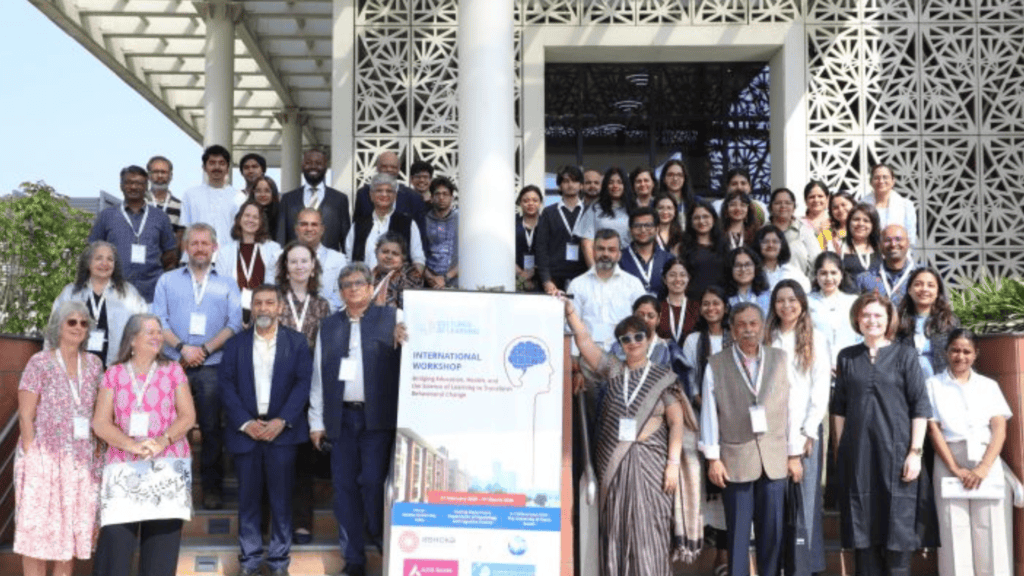
The Department of Psychology at Ashoka University has expanded into the ‘Department of Psychology and Cognitive Sciences’, marking a significant step towards strengthening interdisciplinary and empirically grounded approaches to understanding the mind, behaviour, and learning. As part of this transition, Professor Nandini Chatterjee Singh has been appointed as the new Head of Department (HoD). She is a leading cognitive neuroscientist and science-policy education researcher with an established track record of combining innovative thinking with rigorous scientific evidence to design and implement impactful, research-driven solutions.
The expansion reflects a global shift within psychology towards more empirical, reproducible, and data-driven methods, alongside the growing importance of cognitive science in examining how humans perceive, learn, regulate emotions, and make decisions. Cognitive science integrates insights from psychology, neuroscience, linguistics, biology, and allied disciplines to study the underlying processes of cognition and consciousness.
The Department of Psychology and Cognitive Sciences will continue to offer students a strong foundation in psychological science while opening pathways into emerging areas such as cognitive science, neuroscience of learning, behavioural change, and brain health. It will initially offer cognitive science through electives and concentrations, with plans to gradually scale based on student interest and academic development.
‘Over the last two to three decades, psychology has undergone a conscious shift from being primarily descriptive towards becoming an empirical discipline. This evolution has broadened the field into cognitive science, which is an interdisciplinary, scientific study of the mind, brain, and intelligence that analyses how information is represented and processed. It integrates methods from psychology, neuroscience, computer science (AI), philosophy, linguistics, and anthropology to understand cognitive processes like perception, memory, reasoning and behaviour. As cognitive science is becoming increasingly important in preparing students for the complex challenges of the future, Ashoka is taking a lead in bringing this discipline into the academic mainstream,’ said Professor Nandini Chatterjee Singh.
Bridging Education, Health, and the Science of Learning to Transform Behavioural Change
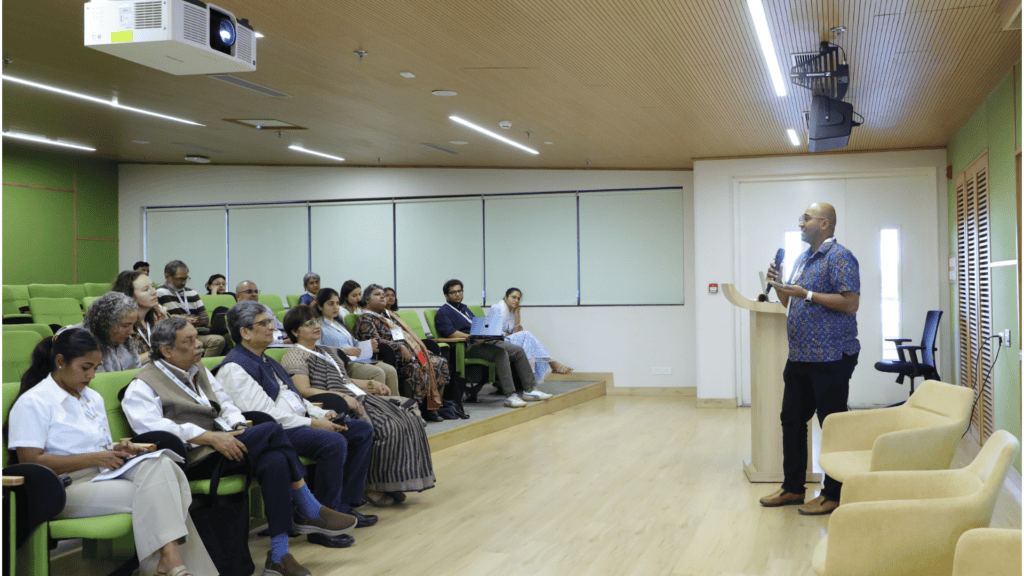
This workshop positions the Science of Learning as a foundational lens for rethinking health and educational interventions in India. While behavioral change initiatives have expanded rapidly across health and education sectors, many remain rooted in narrow informational or incentive-based models. There is a growing need for frameworks that account for cultural context, learning processes, institutional systems, and long-term capability building.
The workshop brought together educators, public health experts, cognitive scientists, policymakers, tech innovators, and community-based practitioners to explore a Cultural Ecology of Health and Education framework. This framework integrates cognitive science, learning theory, public health systems, and cultural context to redesign behavioral interventions for greater effectiveness, equity, and sustainability.