





Field Visits
Guided field visits constitute one of the most effective means to convey the complexity of the environmental issues we face currently. The faculty in the department often organize field visits within Delhi NCR to expose students to various environmental problems and issues.
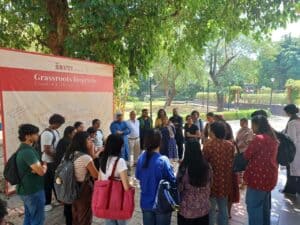
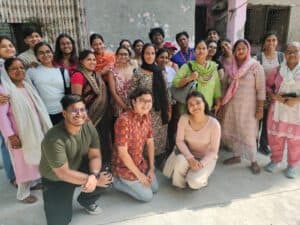
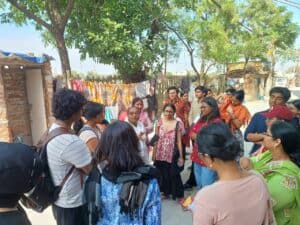
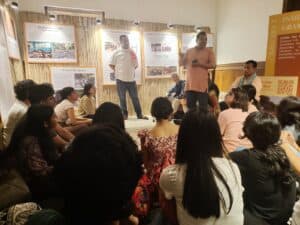
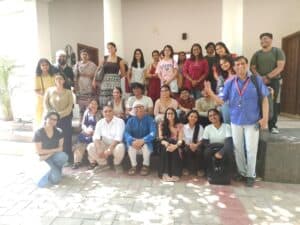
Field visit to SRUTI Exhibition and Bakkarwala–Sawda Resettlement Colonies, Delhi, 18th April 2026
Course: Climate Change governance, policy, and politics (ES-2528/ POL-2147), Energy Transition: people, politics, and sustainability (ES-3011), Indian Environmental Politics (ES-2433/ POL-3052) & Environmental Governance: Institutions, Policy, Politics (ES-2434/ POL-2062)
Faculty: Professor Sumedha Basu & Professor Mukul Sharma
The Environmental Studies Department organised a field visit on 18 April 2026 to two sites in Delhi, designed to bridge classroom learning with grounded realities of climate governance, justice, and community resilience. The students of four courses, Climate Change governance, policy, and politics, Energy Transition: people, politics, and sustainability, Indian Environmental Politics & Environmental Governance: Institutions, Policy, Politics, participated in this visit. The visit combined an exploration of grassroots environmental activism with an on-site understanding of climate resilience practices among the urban poor.
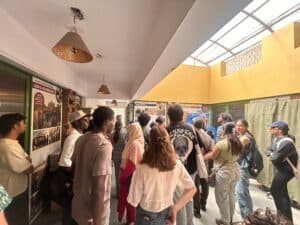
The first stop was the SRUTI (Society for Rural, Urban and Tribal Initiative) exhibition titled “Looking India in the Eye”, held at Travancore Palace. This immersive exhibition foregrounded the complex relationship between development, infrastructure expansion, and the ecological lives of rural and tribal communities. Through visual installations, narratives, and interactive modules, students engaged with themes such as displacement, natural resource conflicts, and the uneven impacts of modernity. The exhibition critically highlighted how large-scale infrastructure – particularly in energy and extractive sectors – often marginalises vulnerable communities while privileging urban-industrial growth. Importantly, the SRUTI team facilitated discussions and participatory exercises, including games on resource management and the role of money, allowing students to grasp how economic systems shape environmental outcomes. The interaction with grassroots activists added a lived dimension to these issues, emphasising resistance, negotiation, and alternative visions of development.
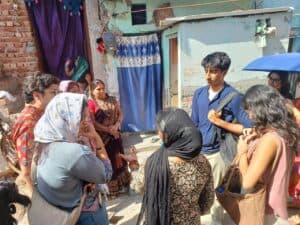
The second part of the visit took students to the Bakkarwala resettlement colonies in West Delhi, where the Mahila Housing Trust (MHT) has been working on climate resilience initiatives. These colonies, largely inhabited by economically marginalised populations relocated from other parts of the city, face acute vulnerabilities to heat stress, water scarcity, and inadequate infrastructure. At Bakkarwala, students observed several community-led interventions, including cool roofing techniques, improved ventilation systems, water management practices, and awareness programmes addressing air pollution and energy efficiency.
A key insight from this visit was the central role of women as agents of change. MHT’s model foregrounds women community leaders who mobilise households, manage local resources, and engage with governance structures. Students interacted directly with these leaders, gaining insight into how localised knowledge and collective action contribute to building resilience in resource-constrained settings. The visit demonstrated that climate adaptation is not merely technological but deeply social and political, involving questions of equity, participation, and rights.
Overall, the field visit provided a layered understanding of environmental challenges across rural and urban contexts. While the SRUTI exhibition illuminated macro-level conflicts around development and natural resources, the Bakkarwala site visit grounded these concerns in everyday practices of survival and adaptation. Together, they underscored the importance of community-based approaches, participatory governance, and the need to rethink dominant models of development in the face of ecological crises.
Field visit to Nizamuddin Basti, 11th April 2026
Course: Rethinking Development and Sustainability (SOA-2243/ ES-2006/ POL-2130)
Faculty: Professor Mitul Baruah
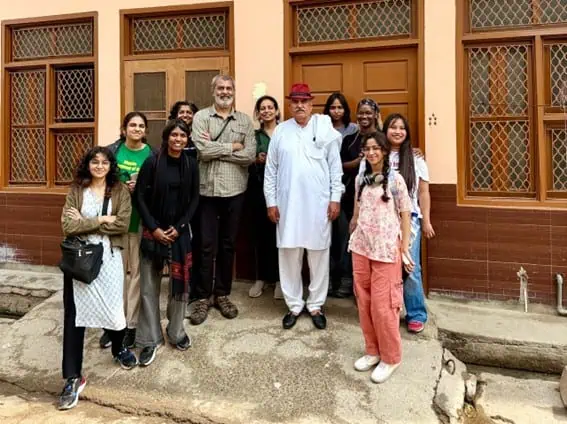
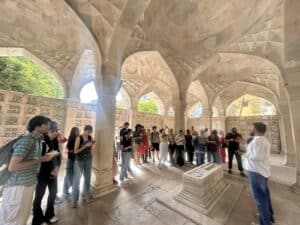
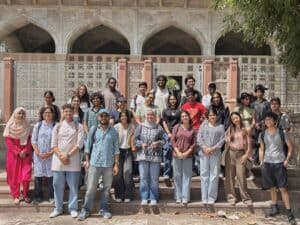
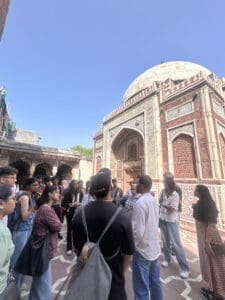
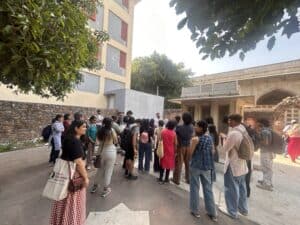
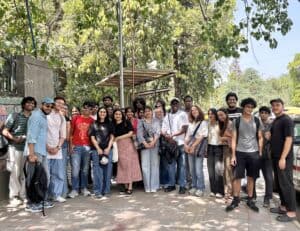
A group of 33 students undertook a field visit to the Nizamuddin Basti on April 11th, 2026, as a component of the ‘Rethinking Development and Sustainability’ course curriculum. The excursion was led by Mr. Rashid Siddiqui from the Aga Khan Development Network (AKDN), and the itinerary encompassed significant built-heritage sites, including Urs Mahal, Chausath Khambha, Ghalib Ki Mazaar, Atgah Khan’s Tomb, Nizamuddin Dargah, and a comprehensive tour of the Basti settlement. The key purpose of the trip was to learn how does heritage-led urban renewal in the Nizamuddin Basti, shaped by the interventions of state, non-state actors, and/or community participation, addresses (or fails to address) issues of urban poverty, marginalisation, environmental sustainability, and built-heritage conservation. In tandem, the trip sought to evaluate the extent to which these efforts uphold the “right to the city” for both the residents and the built heritage itself.
The visit provided students with a learning experience as well as a fun outing(!) This included an overview of the projects undertaken by the Aga Khan Trust as part of the Nizamuddin Basti resettlement. The Aga Khan Trust for Culture (AKDN) is committed to preserving built heritage through restoration and conservation, alongside the network’s engagement in education, community health (with particular emphasis on the mental health of community members), skill enhancement (training women in tailoring and knitting at their community centre), and various sanitation initiatives (such as the de-silting and landscape development of Barapullah Nala).

Field visit to Mandothi Wetlands Bahadurgarh, Haryana, 1st March 2026
Course: Conservation Policy in the Developing World ( ES-2002/ POL-2069/ SOA-2226)
Faculty: Professor Ghazala Shahabuddin
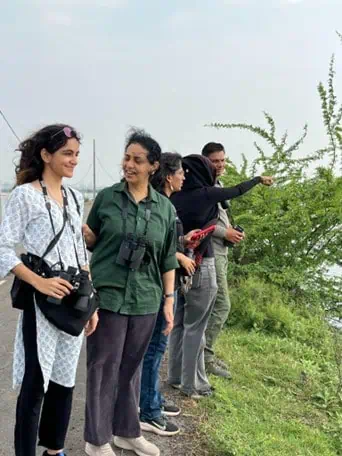
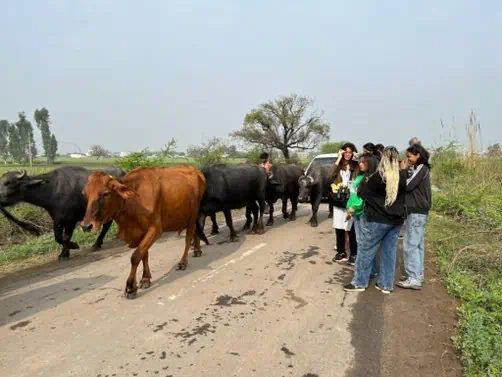
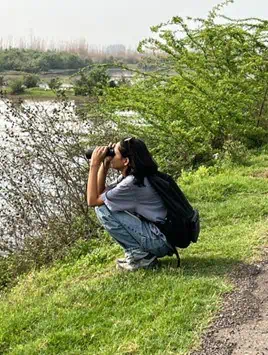
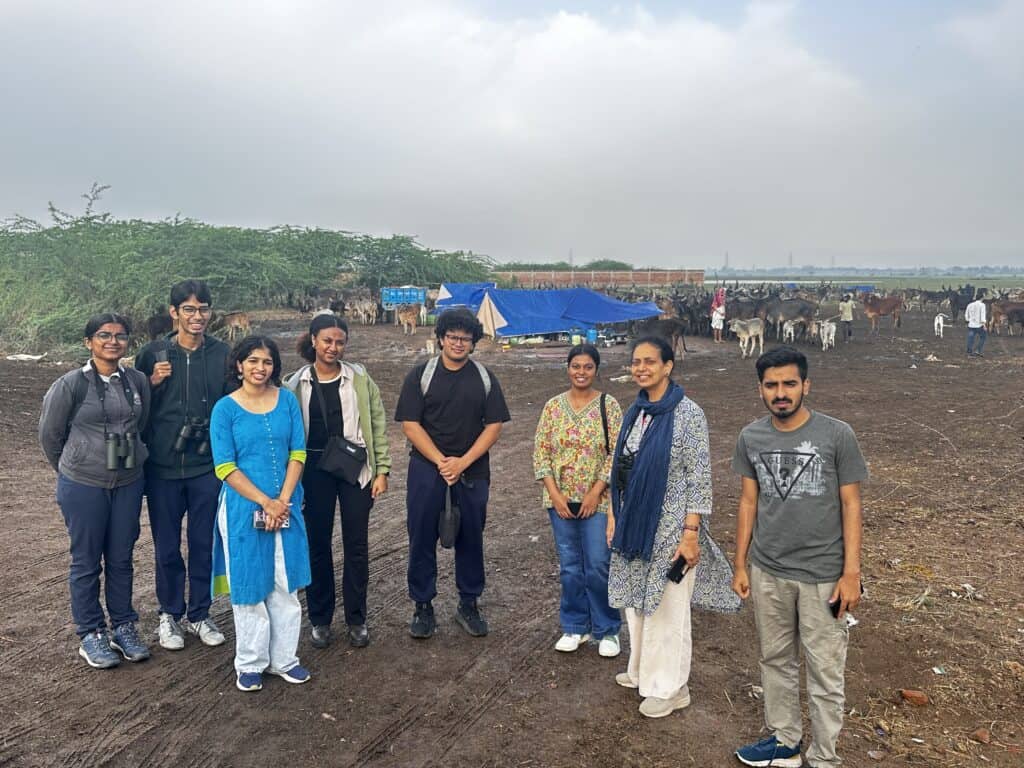
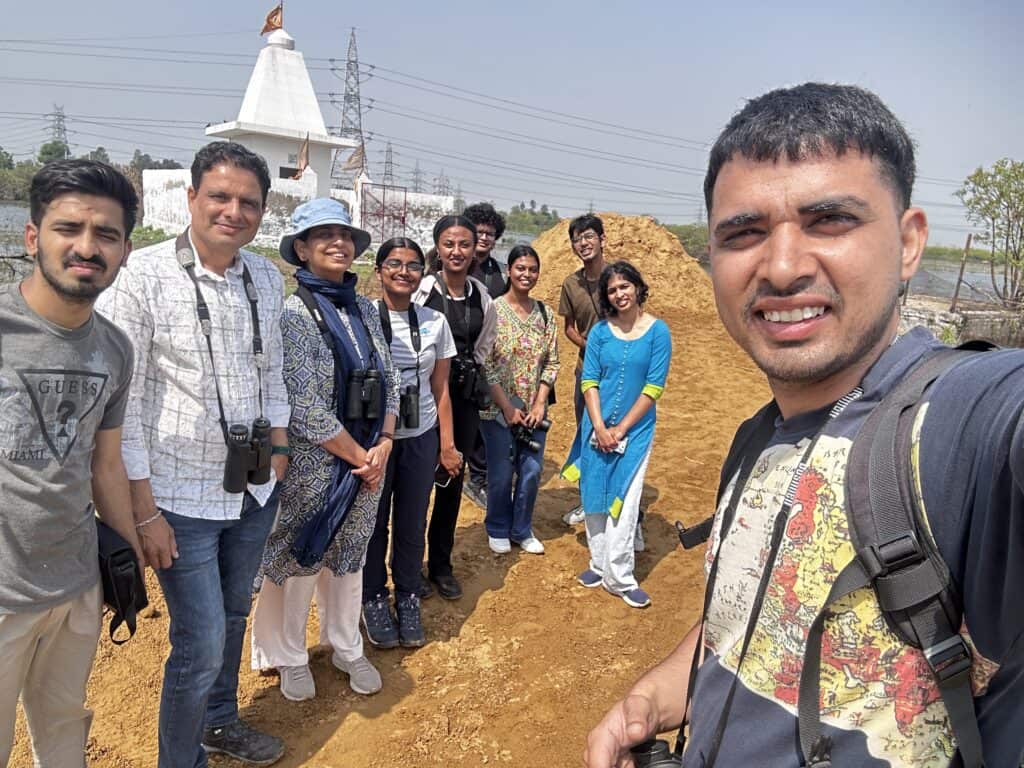
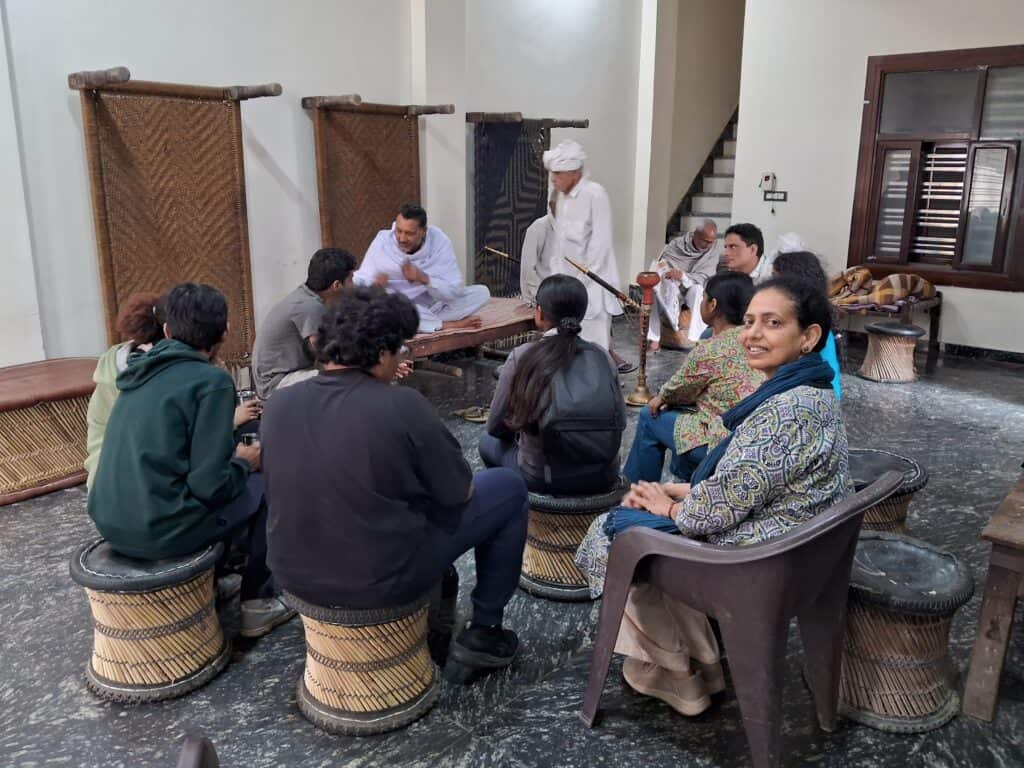
On March 1 2026, Dr. Ghazala Shahabuddin organized a student field trip to Mandothi Wetlands, which has been recognized as hosting high biodiversity in the region. It is located in Bahadurgarh district of Haryana roughly 50 km away from the campus. The students were exposed to the diversity of birdlife in the area, which is indicative of its conservation value. They learnt to identify the common birds, in addition to observing several endangered species such as the barheaded goose and the sarus crane. They met with a group of nomadic pastoralists, the Rehbaris, who also use the wetland seasonally for grazing their livestock. The students then interviewed a few village community members to understand the local attitudes to birds and the potential for coexistence with wildlife in the rural landscape. They discussed the problems surrounding bird conservation and the larger threats to the wetland which were identified as the observed gradual reclamation of the wetland and land use change that could be precipitated by government takeover for an industrial complex. The field trip was successful in raising numerous questions about the difficulties of biodiversity conservation particularly in a situation of urban expansion into agricultural areas, as well as potential of conservation in production landscapes.
Field Visit to Aravali Nagar Van, 10th August 2025
Course: Environmental Studies Foundation Course (FC-0102)
Faculty: Professor Mitul Baruah
On August 10th 2025, Professor Mitul Baruah led a field visit to Aravali Nagar Van – a 180-acre urban forest on the Delhi-Gurugram border. Once a seasonal catchment feeding the Sahibi River, the site has faced decades of ecological stress from mining, encroachment, waste dumping, and invasive species like Prosopis juliflora.
The visit introduced students to ongoing rewilding efforts led by iamgurgaon and The Rewilders, who are working with civic groups and local communities to restore native vegetation, revive water systems, and resist the reduction of conservation to mere “tree planting.” Students observed how ecological restoration requires patience, nuanced intervention, and an understanding of biodiversity beyond surface-level greenery. Discussions also highlighted the complex role of governance, particularly Public Private Partnerships, in balancing accountability, resources, and ecological goals.
For many students, the visit underscored the importance of seeing forests not just as green spaces for human benefit but as living ecosystems with their own rhythms and resilience. It was a reminder that true environmental stewardship lies in learning to coexist with, rather than control, nature.
Field visit to Mandothi Wetlands Bahadurgarh, Haryana, 1st March 2025
Course: Conservation Policy in the Developing World ( ES-2002/ POL-2069/ SOA-2226)
Faculty: Professor Ghazala Shahabuddin
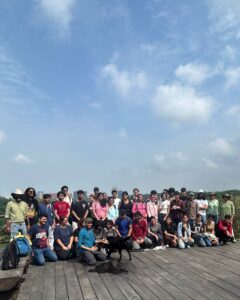
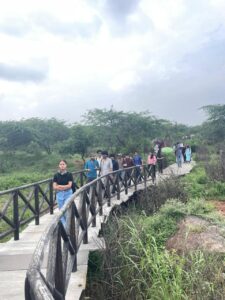
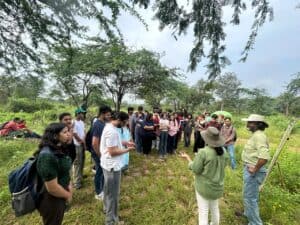
On March 1 2025, Dr. Ghazala Shahabuddin led a field trip to Mandothi Wetlands, located in Bahadurgarh district of Haryana, where the students studied the importance of governmental policies for biodiversity conservation outside formal protected areas. They identified and observed over a hundred bird species, both resident and migratory that use the expansive wetlands and agricultural fields during the late winter, including rare species such as the sarus crane, osprey, bar-tailed godwit and painted stork. Later they took part in discussions with the village community regarding the problems surrounding bird conservation and the larger landscape threats to the wetland. The students left with a good understanding of the complexities of bird conservation in production landscapes in a rapidly urbanizing rural landscape.