





In Conversation With the New Dean of Research: A Vision for What’s Ahead
Professor Gautam Bhattacharyya, the new Dean of the Research & Development Office, brings with him decades of experience across some of the world’s leading research institutions.
 0
0

Professor Gautam Bhattacharyya is Dean, Research at Ashoka University. His research spans the phenomenology of the Standard Model and physics beyond it, including electroweak symmetry breaking, supersymmetry, neutrino physics, and dark matter. Over the course of his career, he has authored highly cited reviews and research papers, delivered plenary talks at major international conferences, and contributed significantly to theoretical high-energy physics globally. He completed his PhD from Calcutta University, and held postdoctoral positions at CERN, Geneva, Switzerland and INFN Pisa, Italy.
Prior to joining Ashoka, he served as Director and Senior Professor at the Saha Institute of Nuclear Physics (SINP), Kolkata. As director, he led major institutional reforms, strengthened recruitment and promotion frameworks, oversaw large-scale research projects, enhanced PhD and postdoctoral capacity, and drove improvements in governance and compliance improvements. His tenure reflects an academic leader equally grounded in scholarship and institutional governance. He is a fellow of the Indian National Science Academy (INSA), the National Academy of Sciences, India (NASI), and the Indian Academy of Sciences (IASc), and a recipient of the JC Bose National Fellowship.
Having worked at institutions such as the Saha Institute of Nuclear Physics, CERN, and INFN, how have these experiences shaped your approach to research and collaboration?
I think I should start not from CERN or the Saha Institute, but from where I did my PhD, that is at Calcutta University. That was a very important time in my life, because I was not very sure which direction I should pursue in my research.
During my PhD, I learned a lot, working with a very energetic Professor (Amitava Raychaudhuri) who was also learning alongside me. That instilled a sense of confidence that a PhD is not a process in which you are simply taught by someone. Here, you are learning together with your supervisor, approaching problems from different perspectives.
After that, I went to CERN for my first postdoc. It was a completely different setup. There was a saying: either you go to different places in the world and meet particle physicists, or you stay at CERN and meet all of them at the same place. I had that privilege. That experience shaped my approach to conducting research in a way I might not have gained anywhere else.
Nobel laureates and well-known scientists would walk by and no one would even blink, such was the self confidence of people around you. You are as good as you are today, which means that everybody is an expert, very confident, and there is no ego. Everyone is the same, chasing the same goal.
After CERN, I moved to Pisa for my second postdoc funded by INFN (Istituto Nazionale di Fisica Nucleare). There too, I had the freedom to work with anybody and collaborate widely. All these three places, Calcutta University, CERN, and INFN, gave me an environment that instilled in me a sense of confidence that wherever I go, I would be able to work confidently and I can lead a particular field.
At Saha Institute, I supervised remarkably bright PhD students and interaction with them enriched my research experience in a significant way.Towards the later part of my career at the Saha Institute, I became the Director of the institute. That required me to shift my focus from research to administration. I could contribute towards the growth of the institute by hiring new faculty members and consolidating the administrative structure.
Overall, I have had a fantastic experience in my career as a researcher, though I didn’t have much experience of teaching because I always worked in laboratories.
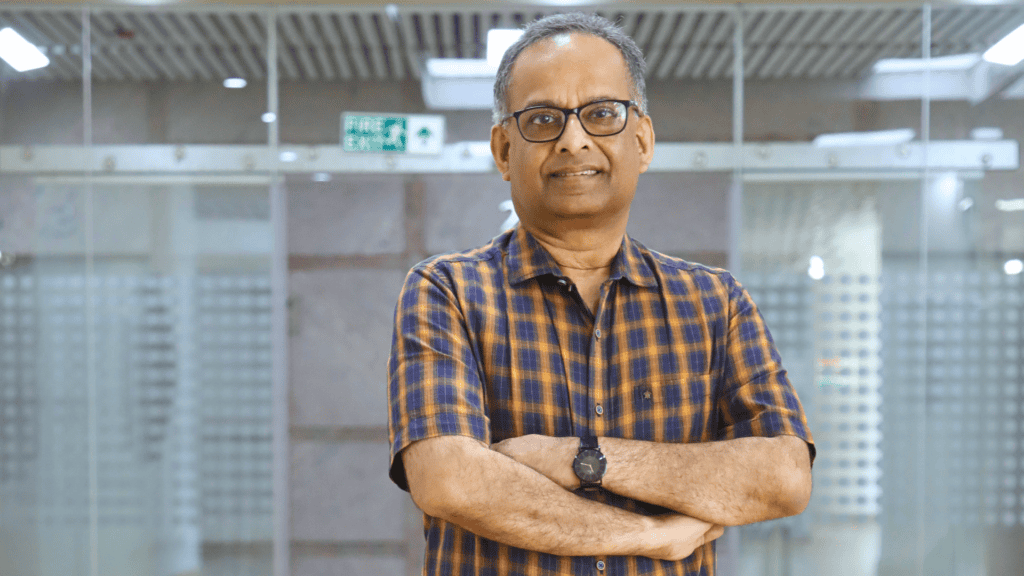
‘As Ashoka University continues to strengthen its research ecosystem, Professor Gautam Bhattacharyya, the new Dean of the Research & Development Office, brings with him decades of experience across some of the world’s leading research institutions.
Having worked at institutions such as the Saha Institute of Nuclear Physics, European Organization for Nuclear Research (CERN), and Istituto Nazionale di Fisica Nucleare (INFN), his journey reflects both deep scholarship and institutional leadership.
In this conversation, Professor Gautam Bhattacharyya reflects on his research journey, his vision for Ashoka, and the role of interdisciplinary thinking in shaping the future of research at the university, while also sharing how Ashoka University gave him the opportunity to come closer to both the teaching environment and research.‘ – Gautam Bhattacharyya, Dean, Research & Development Office, Ashoka University
As the new Dean of Research at Ashoka University, what are your immediate and long-term priorities?
I wouldn’t call any such decision of mine final. It’s always a work in progress, an evolving process.
My short term goal is to bring coherence to what exists, get things organised, and set them moving in the right direction. Ashoka is over a decade old, and research here has genuinely gathered momentum only in the last five or six years. And that is how it was expected to be, because you need a critical strength of faculty members before you can carry out meaningful research. We need some basic framework, and structure on which research can grow. Rules give you freedom. So we are trying to establish certain guidelines based on which research output can be enhanced, and whatever we build has to be scalable.
Today we have around 200 research scholars. In the next five to ten years, the number is likely to multiply. From the Research and Development Office, we are meeting all departments to understand their requirements, how we can support them in applying for more extra-mural grants.
In the long term, I see Ashoka growing in a larger ecosystem of many other research institutions. There is a lot of space where the private universities can play an important role in developing the research ecosystem of the country. Instead of trying to compete with each other, it’s better that we complement each other.
As a liberal arts and sciences university, we are in a unique position to pursue interdisciplinary research. At the same time, we need to identify a few directions in each department where we would like to be number one. We should be known for excellence in some specific areas.
‘A few days back I gave an example of a fascinating collaboration between two people who were almost 2500 years apart. Panini, a grammarian in the fourth century BC wrote the rules of Sanskrit grammar. If you look at those rules, he may be considered one of the first linguists who set the structure of language. Now, in the 19th century, when Mendeleev was formulating his periodic table, he took inspiration from Panini’s structured approach. Based on the properties of silicon, Mendeleev predicted the properties of another yet to be discovered element, naming it ‘eka-silicon’, as a tribute to Panini. This would later be known as ‘germanium’. So you see, inspiration can come from completely different directions.‘
Looking beyond metrics and rankings, how would you define the real impact of research emerging from Ashoka over the next decade?
We have to keep doing what researchers across the world do, publish papers in important journals, and present the results in conferences. That is the global practice, and we should follow it.
But as I mentioned, in different departments, we need to identify specific directions where we will invest more energy. I am not saying those will be the only directions, because we have to teach undergraduate courses and conduct research in multiple directions. But there should be certain areas where we clearly target to be global leaders.
How do you see undergraduate students playing a more active role in the research ecosystem?
The relevance of postgraduate teaching is gradually fading worldwide. The four-year undergraduate programme could be a game changer. After four years, students can directly move into research. So it is extremely important that in the fourth year they are exposed to cutting-edge research.
We need to inculcate the research mindset early. This is all the more important at Ashoka where we are developing a strong research ecosystem. We aim for a future where bright Indian students choose to come here because of the opportunities we offer. I am confident that we will reach a stage when Ashoka is globally competitive in research, and that, in turn, will further strengthen undergraduate teaching as well.
As interdisciplinary research becomes central to solving global challenges, what qualities should young researchers cultivate?
Young minds are often undecided about where they can best express their talent, so it is our responsibility to provide an ecosystem where most opportunities are available. While it is important to create avenues for interdisciplinary research, we cannot ignore the importance of strong foundations in core disciplines. Departments must offer a solid foundation in core subjects.
At the same time, the close proximity of different departments, where the humanities and sciences coexist, naturally allows new directions and ecosystems to emerge. In particular, the close proximity of the Centres in Ashoka can help students understand the relevance of interdisciplinary and even translational research.
One area where India is still lagging is the connection between educational institutions and industry. These Centres can play an important role in bridging that gap, both in the short and long term. From the time of inception, such grand thought has been put in place in Ashoka.