





Reinventing the Research Library: How AI and LLMs Are Building Intelligent Knowledge Ecosystems
A look at how AI and emerging technologies are reinventing research libraries into intelligent knowledge hubs that enable smarter and faster academic research.
 0
0 


In modern culture, libraries are shifting from conventional service to ICT based infrastructure. The traditional knowledge radically changed due to AI inclusion at academic environment. AI adoption helps to evolve libraries from passive repositories to active discovery engines.
AI and large language models (LLMs) are building a strong intelligent system that enhances research libraries more personalized and proactive for interdisciplinary connections.
In view of global competitive research transformation, HDFC Library of Ashoka University is crucial stage of development of a strategic digital resource centre that focus of AI and emerging technologies of research library and allied areas.

There are several points that the best research libraries can address –
A. From conventional to ICT-based system: The Radical Change
The existing library system focuses on limited predefined areas that do not fully reflect present-day priorities such as:
- Collection development
- Cataloguing and classification
- Reference and circulation services
- Subscription-based access to journals
The AI helps in the prediction of future requirements as well as current utilization of identified resources that very convenient for modern librarians in all aspects.
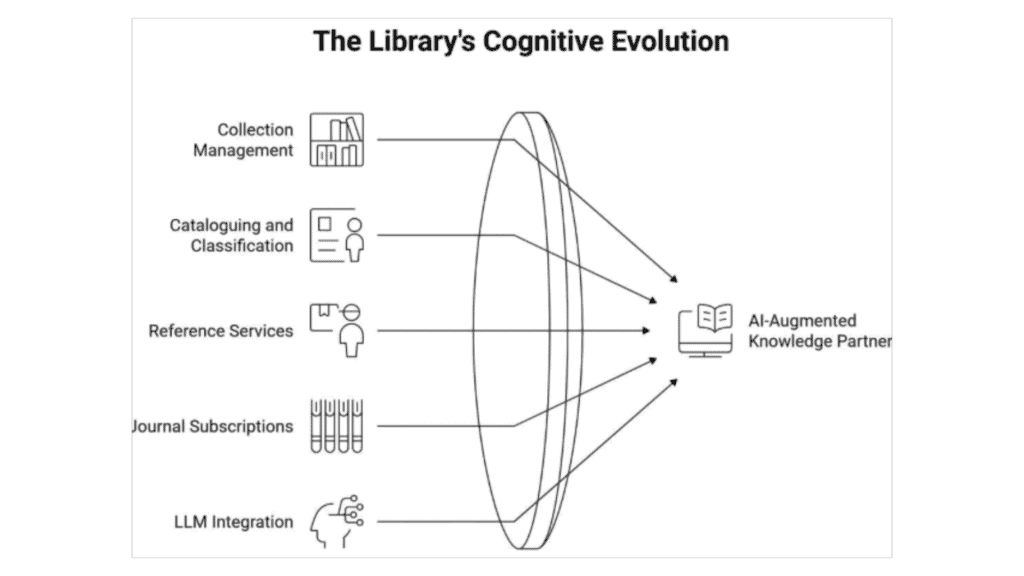
The race of LLMs like OpenAI’s ChatGPT, Claude by Anthropic, and Gemini by Google are not basic search tools, it provides an information with sources, summarize, also in other hand, translate and compare. The changes include information discovery, reference services, scholarly communications, research impacts, and digital literacy. The research library will be a trusted AI-augmented knowledge partner.
B. AI-Driven Discovery: Beyond Conventional Search
Every decade, some changes have come in adoptions humans have evolved themselves.
The conventional search is obsolete for academic needs. Academic search relied on keyword-based retrieval, controlled vocabularies, and Boolean logic. The AI-enhanced knowledge discovery system is capable of handling Semantic Search that understands exact keywords. An article recommendations system that allows researchers to contextualise recommendations. In identifying the linkage between the field of study that does not consists in a traditional indexing system. Suppose a computer science researcher is exploring “climate mitigation”. The AI-enhanced library system can automatically connect with all available subscribed resources and also open access resources available all over the world. This is actually not typical database searching; it’s called “Knowledge Graph Navigations”.
C. Virtual Reference Service with AI-enhanced Resource Assistant
In todays era, most of the users are not willing to come in person every time, to overcome the smooth library resource access, nowadays smart libraries are introducing “Virtual Reference Service (VRS)” that allows users to access any subscribed content anywhere, anytime. However, the LIS professionals can reach out through the virtual space, and users can ask their queries through this terminal.
In the absence of LIS professionals, AI chatbots can respond to frequently asked questions, generate bibliographies, assist with literature reviews, and convert references across citation styles. However, the real innovation lies not in replacing librarians with AI, but in enabling AI-assisted librarianship.
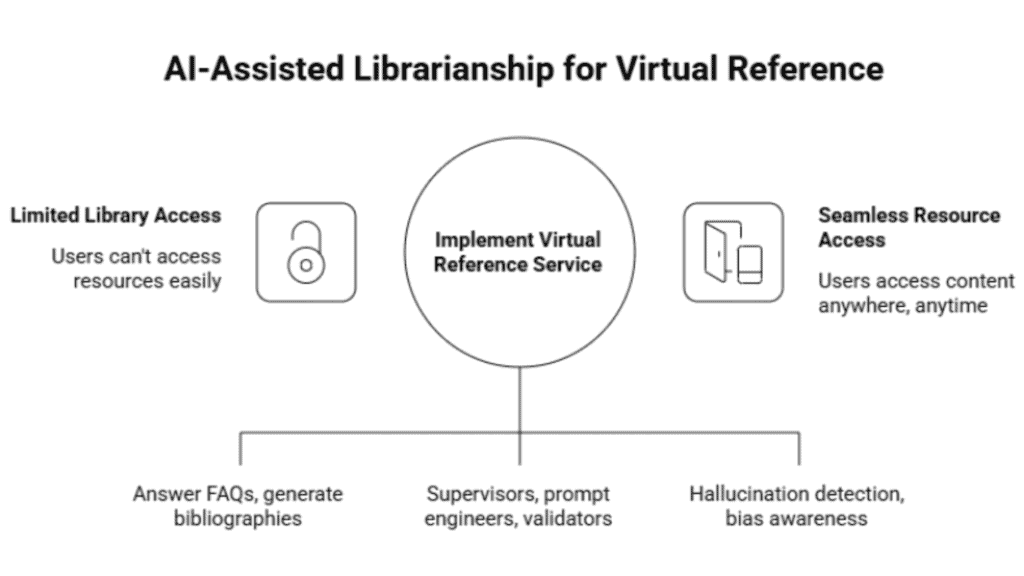
In this evolving landscape, the role of the modern librarian will continue to transform. Librarians will increasingly take on roles as AI supervisors, prompt engineers, information validation experts, and guardians of research integrity.
At the same time, effective use of AI requires close human collaboration with AI systems to ensure reliability and accountability. This includes identifying hallucinations, being aware of algorithmic bias, ensuring ethical compliance, and verifying the authenticity of sources.
The story behind the wall is the librarian’s role shift from book custodian or service provider to Information strategist.
D. LLMs in Scholarly Communication and Research Impact
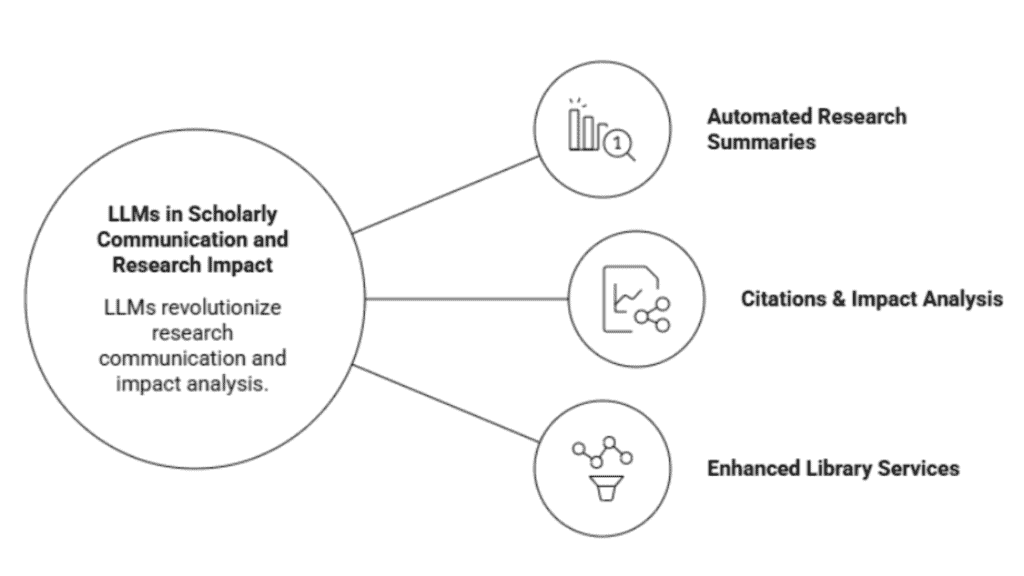
The large language models (LLMs) have reshaped research communication and measurement.
- AI-enhanced Research Summaries: At present, libraries have potentials to generate briefs about policy, summaries of media coverage, outreach content, and grant-ready abstracts, etc.
- Article Citations & Impact analysis: The LLMs are capable of handling “how to identify emerging trends in research”, visualising collaboration networks, and curated interdisciplinary impacts. This AI-enhanced system strengthens the NAAC & NIRF performance and enhances international ranking metrics.
In the end, libraries become a research intelligence hub for all potential users.
E. The Research Library 2030 Vision
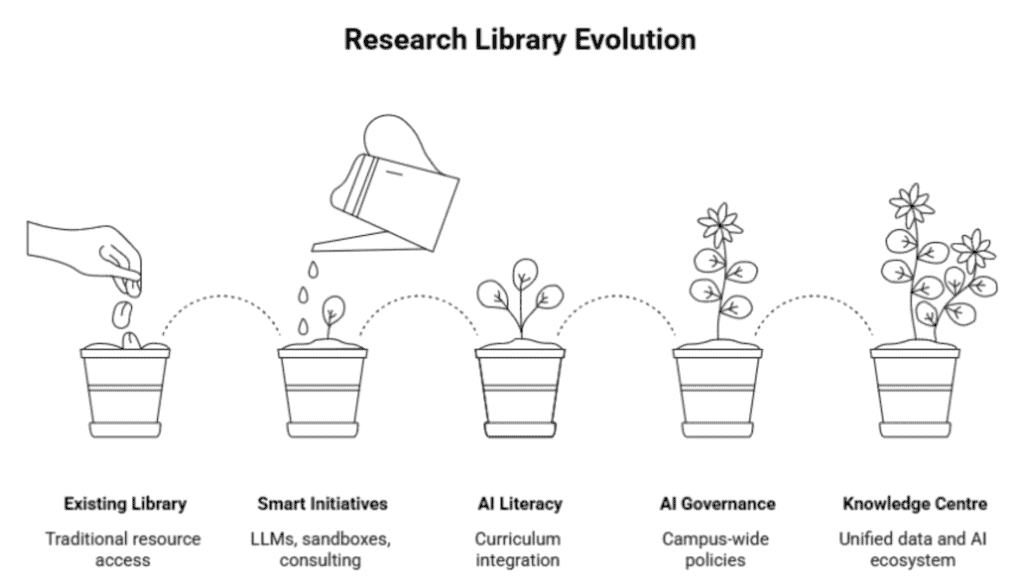
By 2030, research libraries will play a pivotal role in advancing smart library initiatives. This includes integrating LLMs into discovery platforms, maintaining institutional AI sandboxes, offering AI research consulting clinics, embedding AI literacy into the curriculum, and developing campus-wide AI governance policies. In this process, the traditional library will evolve into a Knowledge Centre, a unified ecosystem that brings together data, publications, AI systems, research analytics, and digital scholarship labs to support the future of research and learning.