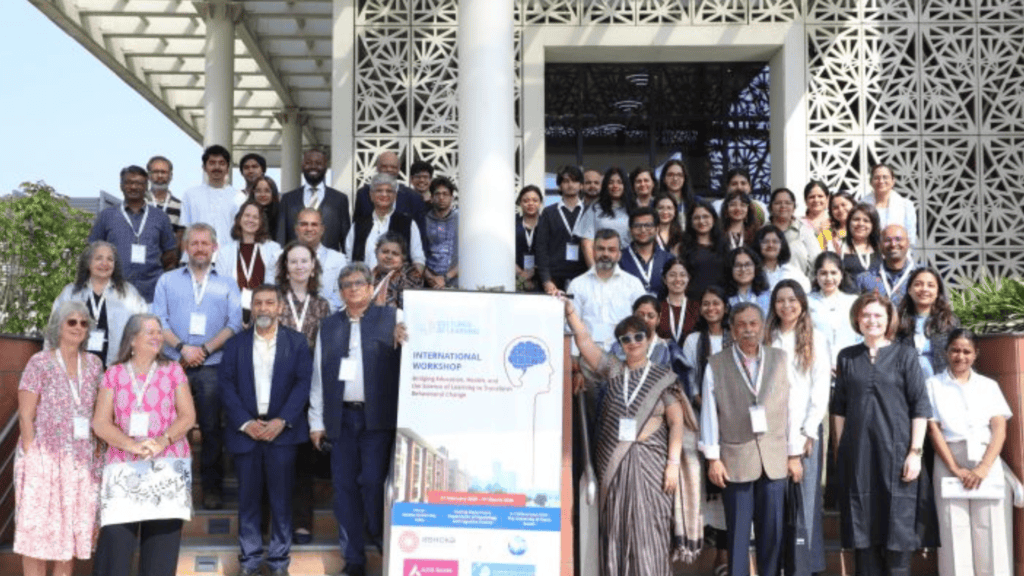






Science of Learning Workshop
Bringing together educators, public health experts, cognitive scientists, policymakers, tech innovators, and community-based practitioners, the workshop integrated cognitive science, learning theory, public health systems, and cultural context to redesign behavioural interventions for greater effectiveness, equity, and sustainability.
 0
0

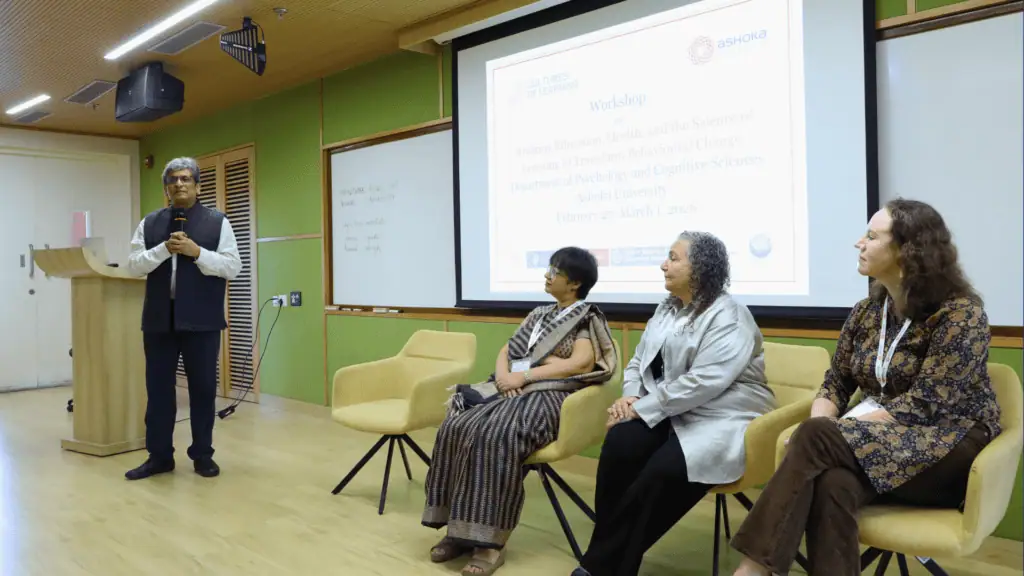
The international workshop positioned the Science of Learning as a foundational lens for rethinking health and educational interventions in India. While behavioural change initiatives have expanded rapidly across health and education sectors, many remain rooted in narrow informational or incentive-based models. There is a growing need for frameworks that account for cultural context, learning processes, institutional systems, and long-term capability building.
Bringing together educators, public health experts, cognitive scientists, policymakers, tech innovators, and community-based practitioners to explore a Cultural Ecology of Health and Education framework, the workshop integrated cognitive science, learning theory, public health systems, and cultural context to redesign behavioural interventions for greater effectiveness, equity, and sustainability.
Building on this approach, the workshop demonstrated how an integrated framework rooted in education, health systems, and the science of learning can produce more effective, equitable, and culturally aligned behavioural change strategies, while articulating key gaps between contemporary science of learning and current health and educational practice.
It presented the Cultural Ecology Framework as a comprehensive model that combines cognitive science with public health and education, moving beyond deficit models and nudge theory, and facilitated interdisciplinary dialogue across health systems, demography, behavioural science, education, and digital health.
The convening also focused on co-designing actionable strategies to transform behavioural change interventions across India, while laying the groundwork for long-term partnerships to support foundational research and capacity-building within Ashoka University’s emerging Cognitive Science group.
Building Systems Hackathon
A core component of the workshop was a structured Building Systems Hackathon. Rather than developing apps or prototypes, participants generated:
- Multi-level systems maps of behavioural change ecosystems
- Intervention logics identifying leverage points and failure modes
- Partnership and stakeholder diagrams
- Research roadmaps for future pilots and collaborative projects
This process transformed disciplinary insights into actionable, institution-building outputs for Ashoka University.
Psychology Is Just as Valuable When Applied to Larger Systems of Global Health, Policy, and Behaviour Change
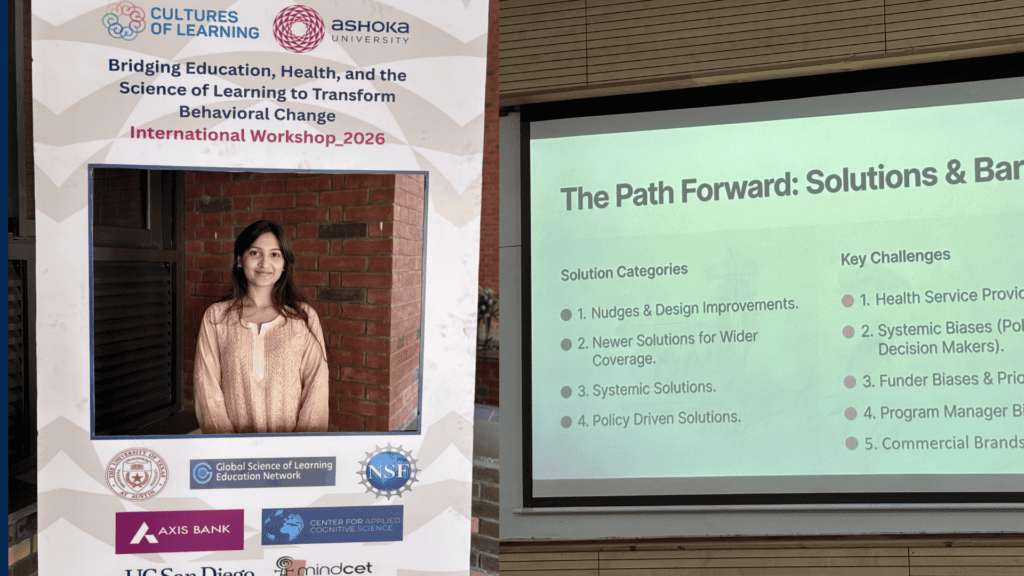
When I first looked at the schedule for the Cultures of Learning Workshop at Ashoka University, I remember thinking: that’s a lot to take in for 2.5 days. It WAS a lot to take in. But in all the good ways!
I was surrounded by experts in education, public health, cognitive sciences and psychology and Professor Nandini Chatterjee Singh encouraged us to hear from them during coffee breaks. First day of the workshop, we heard from Janine Schooley, who introduced us to the Rider and Elephant metaphor in behaviour change. Dr Sharon Marie Barnhardt introduced us to the use of engaging, sensory games to improve uptake of water quality testing as part of the Jal Jeevan Mission at CSBC. Dr Sangu Delle spoke about the use of COM-B framework in CarePoint’s work in African nations. One sentence from his session has stayed with me since: “You can’t learn what you don’t understand.” It’s a simple idea, but one that seems to apply everywhere – from studying for exams to designing systems that actually support healthier behaviours!
A big part of the workshop was the Systems for Change Hackathon, where we worked on a problem statement related to Child and Maternal Health Information Ecosystem and Community Worker Capacity Building, looking at heirarchical structures between ASHA workers and their supervisors acting as potential barriers in ASHAs’ ability to provide health services in their communities. We spent countless hours breaking down the system, identifying pain points at each level and examining how shifts of various kinds could be applied to re-envision the hierarchy. Eventually, we focused on how creating informal spaces for ASHA workers to raise their concerns would allow the rigid barriers between worker and supervisor relations to break down. Another insight was to introduce role clarity in supervision and provide training to supervisors that focused more on encouraging workers to build relationships with their communities rather than following a system of checklist-based reporting of health issues.
Our experts, Dr Pavitra Mohan, Alyson Penrose, Matthew Cruse, Dr. Sharon Barnhardt, Dr. Sneha Shashidhara, Swati, Dr. Geeta Trilok Kumar and our amazing facilitator Jonna Hohenthal were with us every step of the way. All their experiences combined were probably worth an entire year’s worth of learning I have had at Ashoka so far!
Somewhere between systems maps, tea-time conversations, and many post-it notes,I realised that I had often been limiting myself to work that dealt explicitly with psychology or mental health. I now know that the perspectives psychology offers are just as valuable when applied to diagnosing issues within larger systems of global health, policy, and behaviour change – and that I genuinely enjoy working at that intersection!
A huge thank you to Professors Nandini, Andrea Chiba, and Christine Legare for organising this, and to Akshay Nagarajan and all our facilitators for making it happen.
For the First Time, I Felt Elated to Be Treated as an Equal at Tables With Experts From Around the World
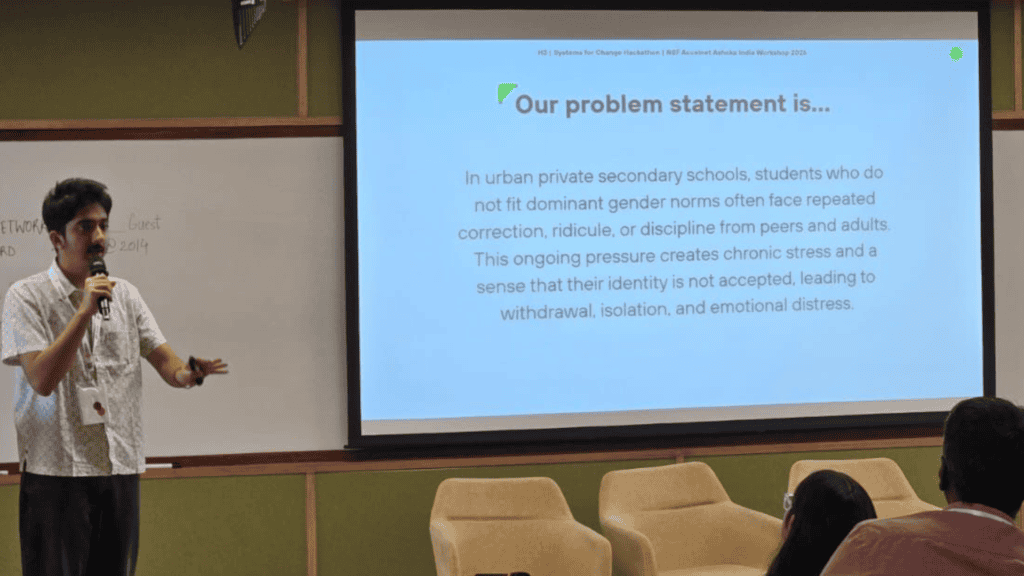
I attended the “Adolescent Health and the Social Architecture of Norms” track of the hackathon. Our group discussed different levels of causes and health effects of engendered social gender norms in urban secondary school adolescents in India. Our project is called, “Gender Norm Enforcement and Adolescent Mental Health in Urban Private Schools.”
We were guided by Professor Nandini Singh from Ashoka University, Rebecca Lundgren from UCSD, Brijesh Rao from PCI, and Akshay Nagraj from UCSD. They helped us first map what factors contribute to the continued issue at 4 levels: individual cognition and behaviour, institutional systems, cultural and community norms, and media and technology.
We then constructed a “core loop” – how different stakeholders like principals, boards of trustees, teachers, counselors, teachers, peers, families, and individuals are involved in interpreting and enforcing social norms. We were informed by the 2018 Navtej Singh Johar v. Union of India case and differing institutional interpretations of its ruling that changed gender and sexuality-based discrimination.
We had to focus on change at one specific level, and chose: Institutional – government policies, educational leadership, families, and the media. For our project pipeline, a research question followed by literature and policy review, study protocol and tools, ethical approvals, and first draft-pilot will be our way to go forward.
For the first time, I felt elated to be treated as an equal at tables with experts from around the world. They were so warm and open to my contributions; it was an amazing space for a creative cum scientist to be. We used methods like sticky notes, charts, very structured worksheets, expert check-ins, and rotating expert mentorship from other groups.
I’m very excited to take this project up long-term with support from Professor Nandini at Ashoka University and the UCSD-Accelnet team and network. I’m also very grateful for this opportunity, to engage with my interest in Neuroscience, Behavioural Science, and Public Health at a formal level.
We Focused on Addressing the Critical Gap Between Informal and Formal Learning Ecosystems in Early Childhood
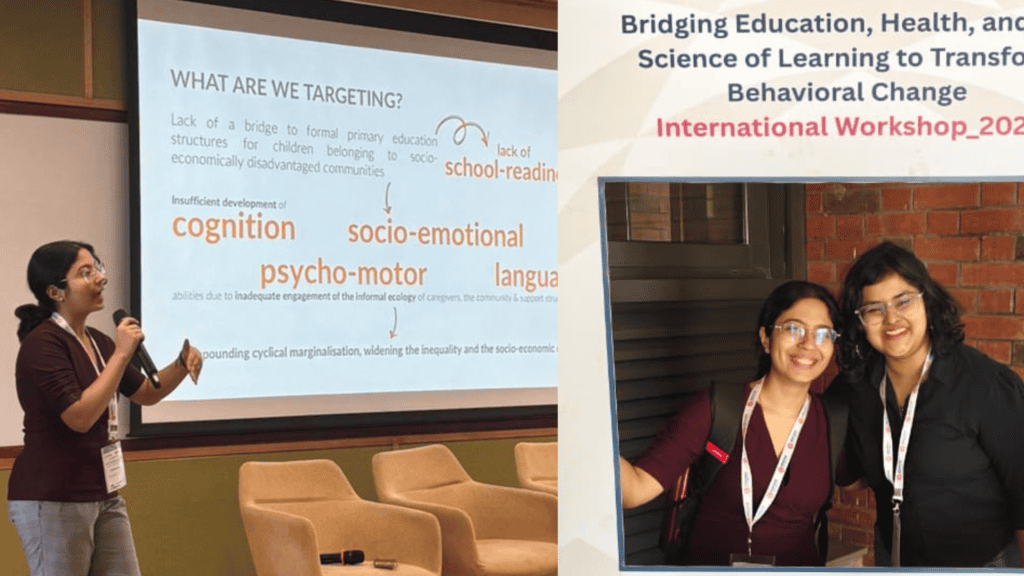
At the Hackathon, all the teams used the action-oriented mindset to identify a central problem or pattern in various sectors of health and education. By critically breaking down the issue into a multi-layered systems map, we found a specific point we would leverage to build actionable solutions.
As a part of the Education track, we focused on addressing the critical gap prominent between informal and formal learning ecosystems in the early childhood (0–5 years) age group in the semi-urban contexts of India. During the sensorimotor and preoperational stages, children develop foundational motor and cognitive skills, but fragmented caregiving and incompatible learning environments often leave them underprepared for formal schooling, which further causes learning gaps to compound over time.
Deploying a bottom-up approach, our team set out to bridge this gap by setting-up a “third space”, that builds on existing systems and is aligned with the vision of the New Education Policy (NEP). We collaborated with professionals and industry practitioners with expertise across a vast variety of disciplines to design play-based, culturally grounded learning models.
The pilot phase of our intervention is located around Asawarpur, a community just outside Ashoka University that is deeply intertwined with. In collaboration with Neev, the community engagement club, we planned to leverage the combined expertise of trained caregivers, pedagogy specialists and student volunteers to co-create this third space. By acknowledging learning as embodied and contextual, we planned to design ways to use play-based therapies and everyday practices like cooking to introduce skills like counting/dexterity into the toddlers’ everyday lives and learning.