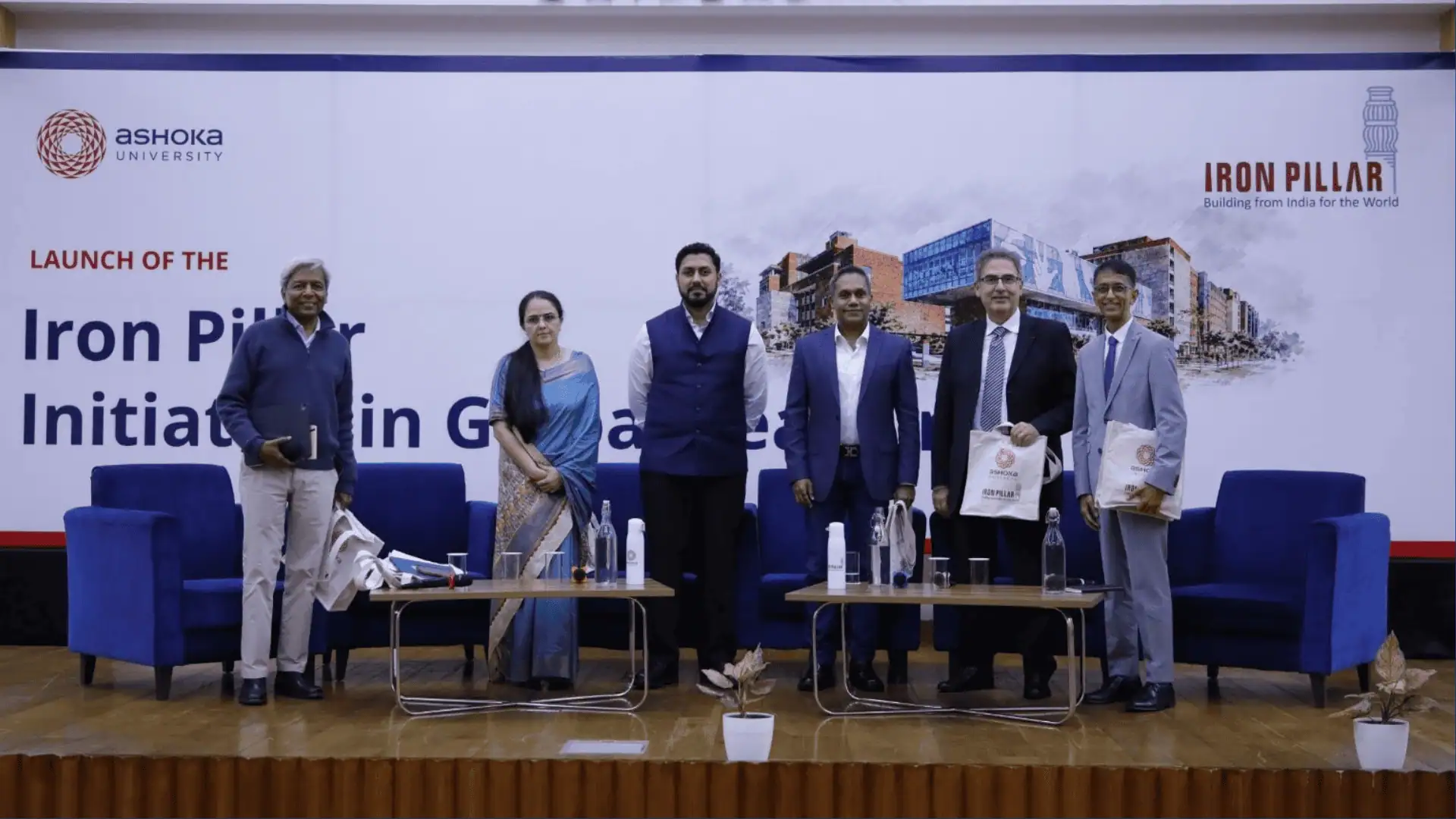






Towards an Anthropology of Understanding: Hermeneutics and Counter-critique in India- Insights from Professor Chitralekha on her recently published work
In this blog, Chitralekha, Associate Professor of Media Studies, Ashoka University talks about her recently published article, Prospects of an Anthropology of Understanding: Gadamer and Countercritique in India.

 0
0 
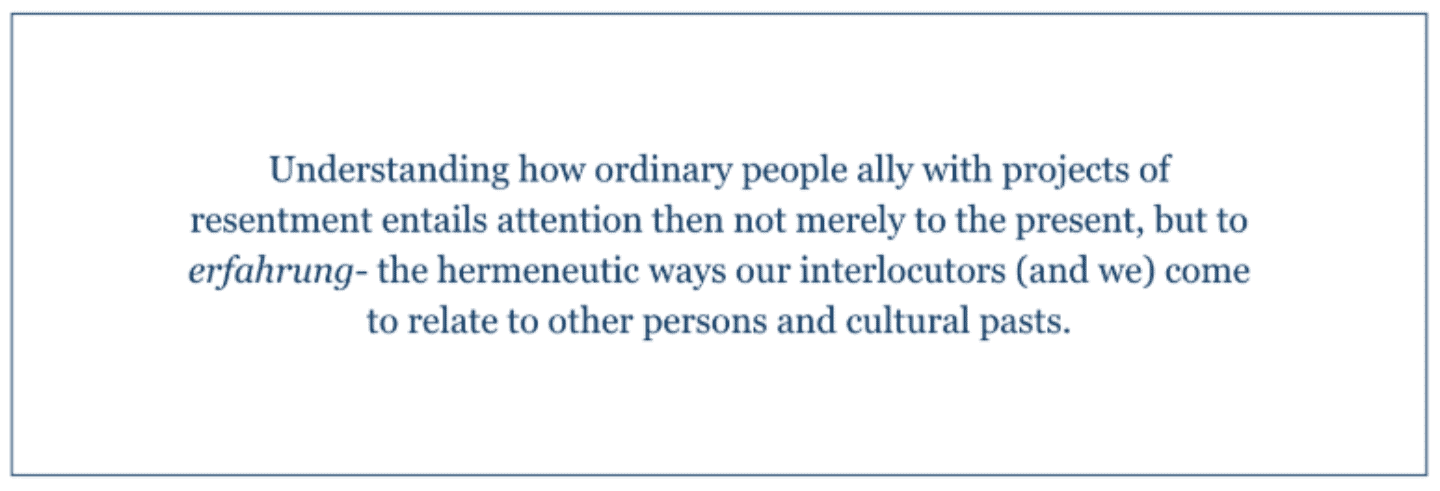
Professor Chitralekha is a social anthropologist at the Department of Media Studies, Ashoka University. In her recent major article in Current Anthropology, which was accompanied by expert commentaries, Professor Chitralekha deploys Hans-Georg Gadamer’s seminal writings in Truth and Method (1975) towards understanding the sharp rise of countercritique in contemporary India. This work draws on her decades-long engagement with anthropology of violence and philosophical hermeneutics. The questions she asks emerged within her prior ethnography in sites that saw horrific collective violence against certain ethnic others in the past. Different from studies of violence that attend to particularities of culture, or culpability, an anthropology of understanding drawing from Gadamer invests in examinations of understanding itself: its histories, locations, modes, reflexivities, and also transgressions. Understanding how ordinary people ally with projects of resentment entails attention then not merely to the present, but to erfahrung- the hermeneutic ways our interlocutors (and we) come to relate to other persons and cultural pasts.
Ethnography, and the question of understanding:
Chitralekha began thinking about the relevance of Gadamerian philosophy to understand (collective) understandings of contexts of mistrust and violence nearly a decade back, attending to Gadamer’s writings on prejudgement or prejudice- that Gadamer saw as the forestructures of understanding. For Gadamer, the aim is not an art or technique of understanding; ‘understanding’ is the object of reflection, which, as he sees it, involves recognition of an experience of truth. We cannot escape our prejudgements (what Gadamer termed as ‘positive prejudice’), but through this dialogical interaction with other horizons, the possibility arises for understanding ourselves, our prejudgements, or ‘tradition’ as mistaken.
Publications and further studies:
Her work in this domain was published in the Journal of the Royal Anthropological Institute in 2017. She continued working on this project during her time as a Member at the Institute for Advanced Study, Princeton, as part of a workshop on Philosophy and Ethnographic Practice, curated for the theme Seminar, School of Social Science (2017-18). She had the opportunity to think further in collaboration with a year-long seminar on Debt (2020-21) with the Committee for Globalisation and Social Change at the Graduate Centre, CUNY. A major essay that she initiated during her time at the Institute and expanded on during the CUNY seminar helped constitute the main ideas in this recent article that thinks with Gadamer’s reflections on erfahrung- the hermeneutic ways our interlocutors (and we) may come to relate to other persons and cultural pasts. She is presently working on a third essay that examines the relevance of Gadamer’s ideas to think about the possible fusion of horizons (horizontverschmelzung) in ethnographic understanding.
The Key Question:
The questions animating Professor Chitralekha’s project on understanding are interdisciplinary in nature, drawing from philosophical hermeneutics, cultural and media studies, as well as her disciplinary training and interests in social anthropology and ethnography. She believes they relate deeply to shared concerns that the humanities and the social sciences face amid the global rise of right-wing politics. These include attention to vocabularies and practices that configure certain analogies, associations, and relationships as more worthy and truth-bearing, anthropology of populism and tensions that describe this domain, discourses and technologies of invasive others and alternative imaginations to address the exclusions they produce, the alliance of mainstream social movements with forces of cognitive capitalism, and most critically, the imperative of ethnographic attention to the critical and creative capacities of ordinary people.
Conclusion:
In a context where critique faces criticism from increasingly large publics, Professor Chitralekha’s interest is to deploy Gadamerian hermeneutics to consider the prospects of doing anthropology that begins by taking this counter-critique seriously. Its insistence, following Gadamer, on reciprocal dialogue as part of the striving towards cultural understanding, engages the possibility of constituting a community beyond (prior) cultural limits and borders.
Edited by Ramyani Kundu and Priyanka (Research and Development Office),
This blog has been adapted from the original research article,
Chitralekha. (2025). Prospects of an Anthropology of Understanding: Gadamer and Countercritique in India. Current Anthropology, 66(3). Available here: https://doi.org/10.1086/735563