Other links:


Other links:




Studying books from different cultures, time periods and languages, the Great Books course introduces students to multiple ways of thinking and being in the world. Complex questions about sexuality, conflict, self, identity and science are navigated with reference to books, and fragments of books, from across geographies and chronologies These books and questions form the core of the course and its explorations.
Code: FC-0601-1 | Semester: Monsoon 2026
FC Section: First Year
Memoirs by women that act as political beacons are the focus of this course. Each one is a stellar example of the genre we know as narrative non-fiction, and each one has been cited and referred to by generations of scholars, practitioners, activists, and students for whom equity and social justice are of importance. Over time, these memoirs have taken on a talismanic importance and yet, they age well with the times and remain supremely relevant. Is that something to celebrate in terms of the prescience of the texts themselves, or to lament in terms of how the world does not seem to become a more equitable place even over the decades since these texts were read for the first time.
The texts we will be reading: Karukku by Bama; The Prisons We Broke by Baby Kamble; Why Be Happy When You Can Be Normal by Jeanette Winterson; ‘Memories of an un-Palestinian story, in a can of tuna’ by Susan Abulhawa; Our Words, Our Stories by A. Revathi.
The final project, which accounts for 50% of the course, will be a group creative project based on any theme in the books we have read together during the semester and can take the form of a podcast, original song, short film, comic book, art installation, live performance, broadsheet or zine.
Code: FC-0601-2 | Semester: Monsoon 2026
FC Section: First Year
We will read select works by Nobel Laureates from around the world, works that have originated in various languages, cultures, histories, geographies, and systems of thoughts and beliefs, mediated by individual talent. We will read for themes that converge and diverge among what is now considered a canon of the 20th Century. We will, alongside the specificities of each text – which will comprise fiction, non-fiction, and poetry – also interrogate the idea of the canon, the notion of the market and literary awards, what constitutes literary excellence, and, finally, what it means to read translated texts.
Code: FC-0601-3 | Semester: Monsoon 2026
FC Section: First Year
Not all narratives become books, and not all books are termed great. Many fabulous tales are transmitted orally, and several terrific ideas are communicated through non-verbal means like art. Of the millions of stories and ideas and arguments that are written down in book form, only a fraction have significantly impacted the world as we know it today. In this course, we will read several books and fragments of books that have shaped the ways in which we think about sexuality. These books come from different cultures, time periods, languages, and they cover different subjects. Nonetheless, they all have something significant to offer us as we think about one of the most universal yet thorny issues in the world today.
Code: FC-0601-4 | Semester: Monsoon 2026
FC Section: First Year
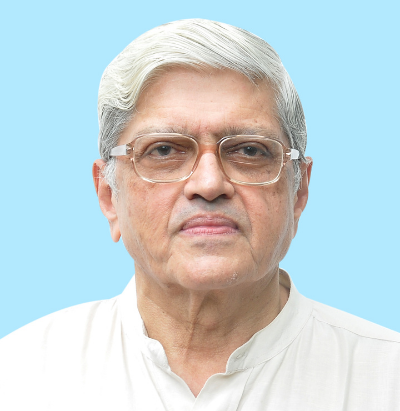
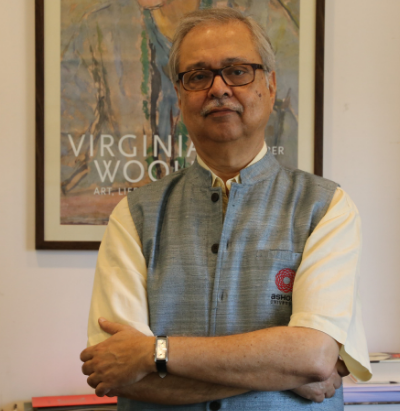
This course will be taught by Gopalkrishna Gandhi in the first half of the semester (till the mid-semester break) and after the mid-semester break by Rudrangshu Mukherjee. The course will entail a deep engagement with six texts. Students must be prepared to read.
Code: FC-0601-5 | Semester: Monsoon 2026
FC Section: First Year
This course seeks to reflect on care and love both conceptually and experientially. What does it mean to love and care for oneself and for others? What allows us to love and care? What prevents us from caring and loving ourselves and others? What forces—personal, interpersonal, or collective and communal—regulate, prescribe and even prohibit experiences and expressions of love.
Our primary goal in the course is to work towards developing a critical and comprehensive language around understanding care and love as the basis for any and all configurations of relationalities that both make and unmake our senses of being in the world. Beginning our journey with selections from The Symposium by Plato, verses from the Gatha Sattasai, and poetry from the Akam repertoire of Sangam literature, we will make our way through more contemporary iterations and meditations on caring and loving, such as Roland Barthes’ A Lover’s Discourse and Ocean Vuong’s On Earth We Are Briefly Gorgeous. All along the way, we will be reflecting on and attempting to problematize “traditional” and “normative” structures within which care and love are usually understood and experienced.
Code: FC-0601-6 | Semester: Monsoon 2026
FC Section: Senior Year
Love and Other Literary Moods: the Great Books Challenge in the Age of AI
We will read select books (and extracts) from a wide range of themes and ask ourselves what makes them great.
Specifically, we will examine the dominant mood the text evokes – its “rasa” – and how it acts in concert with other elements to craft the specific version of the book that goes out into the world and is recognized as “great”. Over the first eight/ nine weeks, we will closely read a wide range of texts, both fiction and non-fiction, in and out of class. In the final four weeks of the course, each student will – as a part of a group or individually – work on a project that will seek to bring in a new mood or invent a new rasa, alongside a “great” book/ short story/ cycle of poems of their choice. Audacious experiments are not only allowed but encouraged!
Through the weeks we spend together, reading and writing, we will also consciously – and consistently – situate ourselves in the present. We will pose to ourselves honestly – and intuitively – meta-questions, such as: WHY should we read great texts at all in the age of AI, when summaries are available in the blink of an eye and seem to give us everything we need? Is a great text one where the summary misses the mood? And, finally, the mother of all key questions: WHAT’S SO GREAT ABOUT GREAT BOOKS?
Code: FC-0601-7 | Semester: Monsoon 2026
FC Section: Senior Year
This Course demands engagement with 6 Texts.

 arpita.das@ashoka.edu.in