






Event Calendar

Coordinating Multi-agent Learning while Doing


Colloquium Announcement
Coordinating Multi-agent Learning while Doing
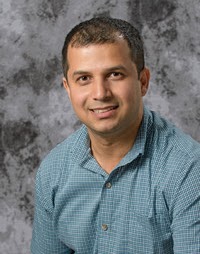
Ankur Mani
University of Minnesota, Twin Cities
Abstract
Sequential decision making by a large set of agents has gained significant attention over the past decade and is demonstrating its immense potential with the arrival of AI agents. In such settings, even a little amount of experimentation from a few agents would benefit all others but obtaining such experimentation could be challenging for a central planner. The academic literature has focused on mechanisms for promoting experimentation through monetary incentives and persuasion through careful information disclosure. In many scenarios this approach is either impractical or has negative long-term consequences, such as in drug evaluation, secondary sales, supply chains, innovation, customer service, and others. We study simple controls that the central planner can use to coordinate experimentation. We consider a set of myopic agents that observe their own histories but not the histories of other agents. In a continuous-time stochastic multi-armed bandit model, the agents pick arms myopically and receive instantaneous rewards. Meanwhile, the central planner can observe the history of all agents. We consider a class of policies where the central planner is allowed to irrevocably remove arms. We show that an appropriately chosen policy within this class can generate the needed experimentation and match the regret bounds for a centralized problem thus mitigating the cost of decentralization. We also quantify the minimum number of agents that are needed for such a policy to be asymptotically optimal and the impact of the number of agents on the speed of learning. We also study online stochastic linear programs and characterize a geometric policy that mitigates the cost of decentralization and myopia.
About the Speaker
Ankur Mani is an affiliated faculty in the Industrial and Systems Engineering department at the University of Minnesota, Twin Cities and Stonybrook AI Innovation Institute. Previously, he was an assistant professor at the University of Minnesota and a Levenick Scholar at the University of Illinois Urbana-Champaign. He received his Ph.D. in Media Arts and Science at the Massachusetts Institute of Technology and spent a year at the New York University, Stern School of Business and Microsoft Research. His research takes an interdisciplinary approach towards efficient design of infrastructure networks and collective decision making, rooted in social and economic sciences, operations research, and computer science. His research has appeared in several prominent venues and received accolades within these disciplines (INFORMS, POMS, Aviation Applications Society, Net Institute, ISPOR).
Date: Tuesday, December 8, 2026
Time: 01:30 PM – 02:30 PM
Venue: TBA