





Field Visits
Guided field visits constitute the most effective means to convey the complexity of the environmental issues we face currently. Environmental Studies Department faculty frequently take their students on local field trips to expose their students to relevant problems and issues.
Field Visit to Aravali Nagar Van
Part of Environmental Studies Foundation Course taught by Professor Mitul Baruah in Summer 2025 semester.
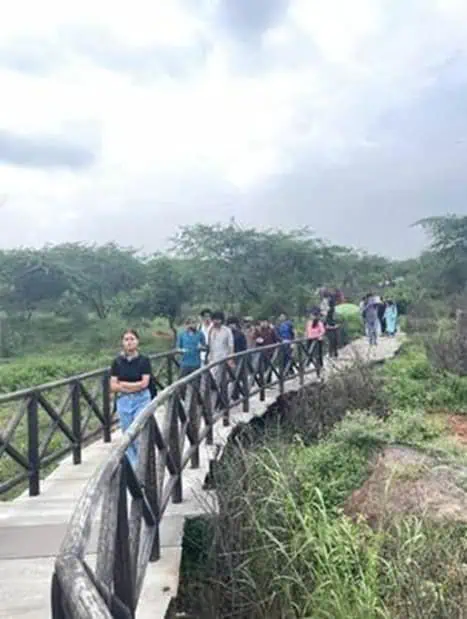
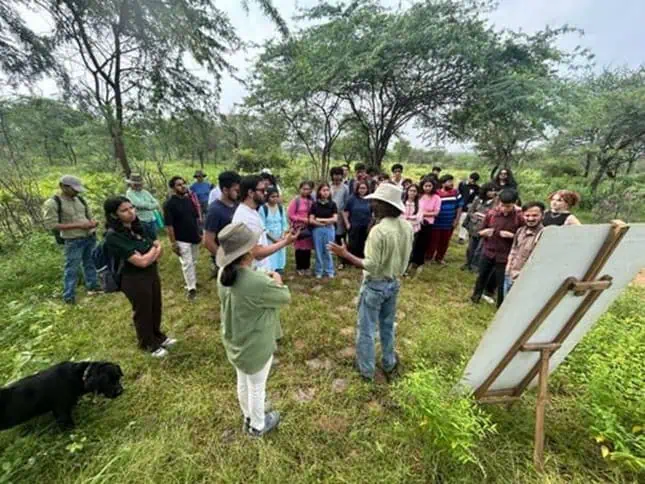
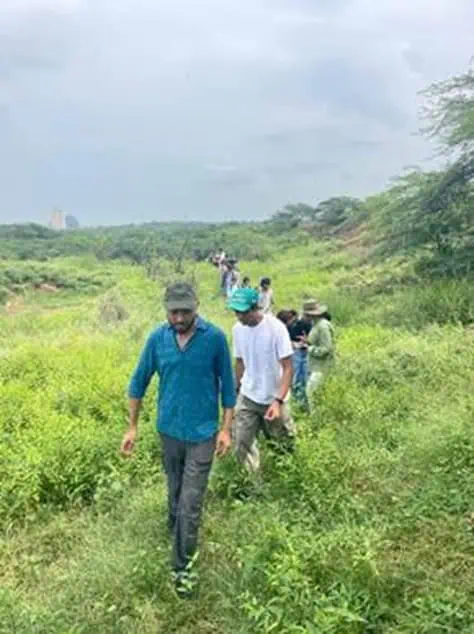
On August 10th 2025, Professor Mitul Baruah led a field visit to Aravali Nagar Van – a 180-acre urban forest on the Delhi-Gurugram border. Once a seasonal catchment feeding the Sahibi River, the site has faced decades of ecological stress from mining, encroachment, waste dumping, and invasive species like Prosopis juliflora.
The visit introduced students to ongoing rewilding efforts led by iamgurgaon and The Rewilders, who are working with civic groups and local communities to restore native vegetation, revive water systems, and resist the reduction of conservation to mere “tree planting.” Students observed how ecological restoration requires patience, nuanced intervention, and an understanding of biodiversity beyond surface-level greenery. Discussions also highlighted the complex role of governance, particularly Public Private Partnerships, in balancing accountability, resources, and ecological goals.
For many students, the visit underscored the importance of seeing forests not just as green spaces for human benefit but as living ecosystems with their own rhythms and resilience. It was a reminder that true environmental stewardship lies in learning to coexist with, rather than control, nature.
Field Visit to Mandothi Wetlands, Bahadurgarh, Haryana
Part of the course Conservation Policy in the Developing World ( ES-2002/ POL-2069/ SOA-2226) taught by Prof. Ghazala Shahabuddin in Spring 2025 semester.
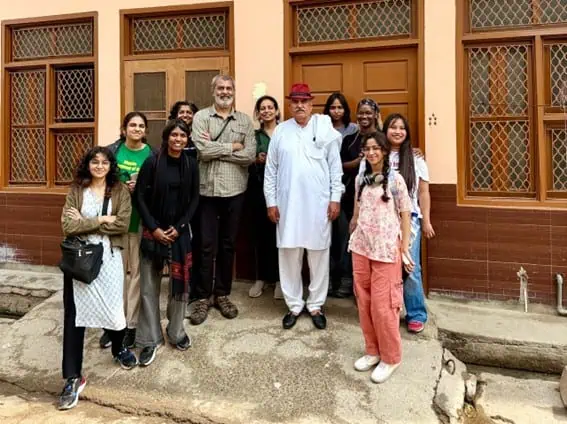
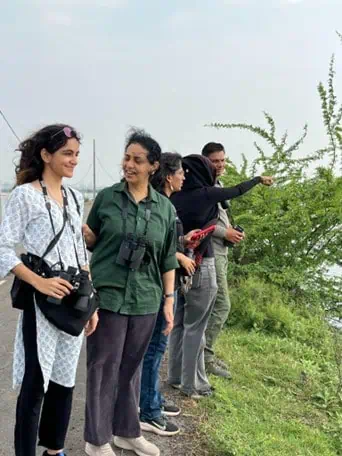
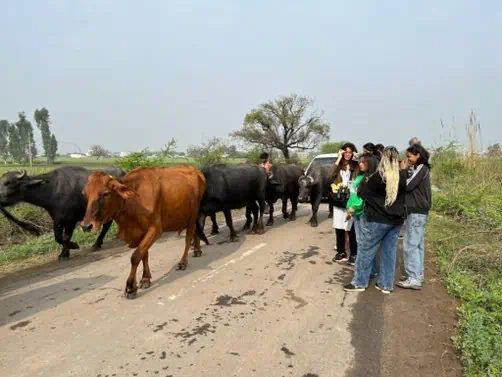
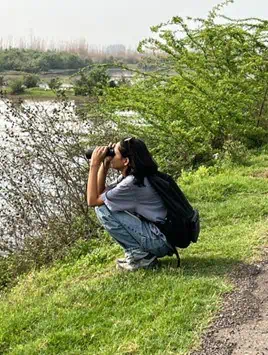
On March 1 2025, Dr. Ghazala Shahabuddin led a field trip to Mandothi Wetlands, located in Bahadurgarh district of Haryana, where the students studied the importance of governmental policies for biodiversity conservation outside formal protected areas. They identified and observed over a hundred bird species, both resident and migratory that use the expansive wetlands and agricultural fields during the late winter, including rare species such as the sarus crane, osprey, bar-tailed godwit and painted stork. Later they took part in discussions with the village community regarding the problems surrounding bird conservation and the larger landscape threats to the wetland. The students left with a good understanding of the complexities of bird conservation in production landscapes in a rapidly urbanizing rural landscape.