








Inside a First-Year Classroom at Ashoka University
What makes a first-year classroom at Ashoka University different? Srishti Choudhary reflects on inquiry-driven teaching and interdisciplinary learning.
 1
1

A first-year classroom at Ashoka University is unusual in that it doesn’t replicate the typical Indian education scenario – professors lecturing huge classes, some students dozing off, most lost in their own world.
Ashoka classrooms are usually designed around the Socratic style of teaching, that is, learning through inquiry. Classes are dynamic, where students are encouraged to speak as much as professors. Students learn as much through mutual discussion and debate as by way of lecture.
Foundation Courses Demystified
A crucial characteristic that makes a first-year classroom at Ashoka stand out as compared to other Indian universities is the pedagogic strategy of Foundation Courses (FCs). Every undergraduate student at Ashoka, irrespective of their majors, must complete a total of 9 FCs, namely Introduction to Critical Thinking (ICT), Great Books, Mind and Behaviour, Literature and the World, Economy, Politics and Society, Environmental Studies, Principles of Science, Quantitative Reasoning and Mathematical Thinking and Indian Civilisations.
These FCs, spread across a range of disciplines, encourage interdisciplinary thinking and afford students a taste of each of these disciplines, allowing them to make informed decisions about their majors and minors. For example, ICT, taught by the Undergraduate Writing Program, is one of our flagship courses that instructs students in critical thinking and academic writing, and unlearning patterns of memorisation that the Indian school system forces students to internalise – skills every Ashokan must keep safe in their dossier.
What a Typical Week at Ashoka Looks Like
A typical week during one’s first semester at Ashoka would consist of two hour-and-a-half-long lectures for each of their four FCs, and one hour-long Discussion Section (DS) for each course except ICT. While professors hold lectures for classes comprising at least a hundred students for FCs, the DSs, led by Teaching Fellows (TFs), break up these classes into smaller sections. The DSs are meant to go over topics covered in class, and often provide one-on-one support through office hours and discussions with the TFs. This kind of individualised support is key when students are still fledglings, and helps strengthen their skills in reading, writing and overall learning.
Learning, Assessments and Discussions
It is impossible to make a standardised claim about assessments and coursework, because every course at Ashoka is unique, and professors have different ways of designing their courses. However, generally speaking, academics at Ashoka are not oriented towards pre-exam cramming, but gradual assimilation. Courses usually have readings, weekly assignments like posts, presentations, field trips and quizzes that ensure continuous study, a midterm assignment or exam, and a final essay or exam.
Every component contributes to the final grade, with maximum weightage usually accorded to the midterm and final assignments/exams.
The course load in any given semester is mostly manageable with steady effort. Class participation is also a significant component, which is something we unlearn from Indian boards, where we are taught to absorb, cram and regurgitate. Class participation reflects initiative and effort, and students are more than welcome to disagree, object, question and challenge both their classmates and the professors. Such discussions help raise questions and resolve confusion.
Why Students at Ashoka Grow Faster
Students at Ashoka, naturally, grow and learn faster because learning is both guided and independent. We reap the benefits of attending lectures and discussions if only we put in the initial work of preparing for class – reading, completing assignments, and also making a note of questions or thoughts that might be raised in discussion. So long as one is willing to learn, there is no place like Ashoka when it comes to academic gratification. Lectures are not just meant to explain, but to broaden our realms of possibility.
A first-year classroom at Ashoka would never rush through syllabi or prepare for exams. Unlike public universities, where students study a maximum of two subjects per semester, the first semester at Ashoka offers a diversity of courses, familiarising students with different praxes of reading, writing, and, broadly, engaging with the world in a nuanced and responsible fashion.
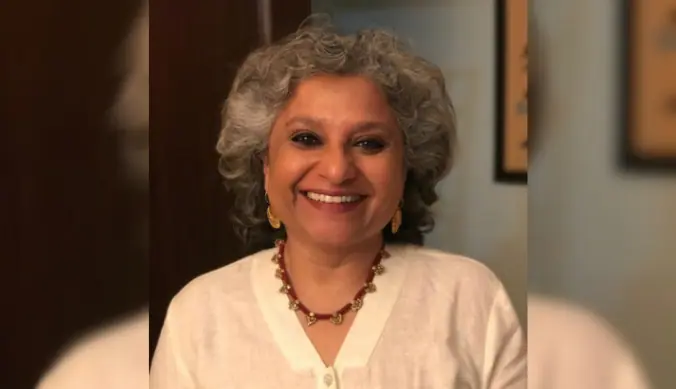
– Written by Srishti Choudhury, English Major, Ashoka University


Study at Ashoka
