


Other links:


Other links:




Have you ever wondered how your body fights off infections, heals cuts, or silently guards against invisible threats like cancer? Your body houses the most advanced defence system on Earth, known as the immune system. Every day, your immune system silently protects you — from cuts, infections and even rogue cancer cells. It is smart, powerful, and constantly adapting. But what happens when it is outsmarted by cancer, tricked by viruses, or starts attacking your own cells?
The Cosmic Dance of Your Immune System is a live, interactive course that takes you inside this invisible universe and explores how modern science can “train” the immune army to become smarter, stronger, and fight invaders with surgical precision and with fewer side effects. From Nobel Prize-winning therapies to futuristic vaccines, this course is a journey through one of the most exciting frontiers in medicine today.
Through stories of real patients, eye-opening science, and hands-on projects, you will learn not just what the immune system does, but how to apply this knowledge to imagine cutting-edge, novel therapies. By the end of this course, you won’t just understand your immune system—you’ll see it as a dynamic, beautiful, and powerful dance that keeps you alive, and you’ll gain the tools to think like a modern immunologist, today and into the future.
The course culminates in a collaborative capstone project where you will form small research teams and investigate a global immunotherapy challenge such as how CAR-T or checkpoint inhibitors are being used across different cancers. Drawing from open databases and scientific reports, you will create a concise, data-driven policy brief proposing ways to make modern immunotherapy more equitable and accessible.
What’s more? Top students may also achieve an extended opportunity to visit the science laboratories at Ashoka University & at Bose Institute, gaining first-hand exposure to cutting-edge research and a chance to interact with the research teams.*
*The invitation to work in the lab will be based on prior lab safety approval, inspection and standards clearance.
This course is for high schoolers passionate about biology, medicine, biotechnology, research & science communication. It is ideal for all students interested in learning how vaccines really work. No prior knowledge of immunology is required, but students are encouraged to bring their imagination.
Prerequisite: High proficiency in written & spoken English
By the end of this programme, you will:
| Week | Lecture Module | Project Module |
|---|---|---|
| Week 1 | The Incredible Army Within
Get a broad overview of the innate and adaptive immune system and its components. |
Design your Immune Avengers
Design Pokémon-like cards where immune cells are characters with powers and weaknesses. |
| Week 2 | Recognition, Interception, and Neutralising Invaders
Dive into the multiple checkpoints and strategies of the immune system that recognise, intercept and neutralise invaders like viruses, bacteria, parasites or even cancer. |
The Great Escape
Enact a roleplay where students show how cancer or viruses put on “disguises” to slip past the immune system |
| Week 3 | When The Immune System Fails
Explore current state-of-the-art methodologies and discuss possible future breakthroughs powered by AI. Investigate how immunity can be engineered when the immune system becomes weak or goes rogue. |
Letter from the Future
Undertake a creative writing project of writing a letter from 2045, compelling you to imagine future transformations in immunology and its impact on everyday life. |
| Week 4 | History and Breakthroughs
Trace the history and scientific breakthroughs that shaped the field of immunology, including monoclonal antibodies, vaccines, and Nobel Prize-winning work. |
Timeline Poster
Students will work in groups to create a visual “museum wall” of history and breakthroughs in immunology. |
| Counselling:
Get a chance to ask the faculty and the mentor questions and get their answers and perspective. You are encouraged to ask questions to the faculty about the following aspects:
|
Mentoring:
You are encouraged to ask questions to the mentor around the following aspects:
|
Students will work in teams of 2-3 to complete a research-based project. Using publicly available scientific databases and online resources, each group will collect and analyse data to address a broad question in modern immunotherapy. For instance, you will pick one cancer type and research how immunotherapy is being used against it worldwide, or you will investigate the cost and accessibility of modern immunotherapies such as CAR-T or checkpoint inhibitors. By comparing prices and policies across countries, students will create a brief policy-style report with data and ideas for making these treatments more equitable.
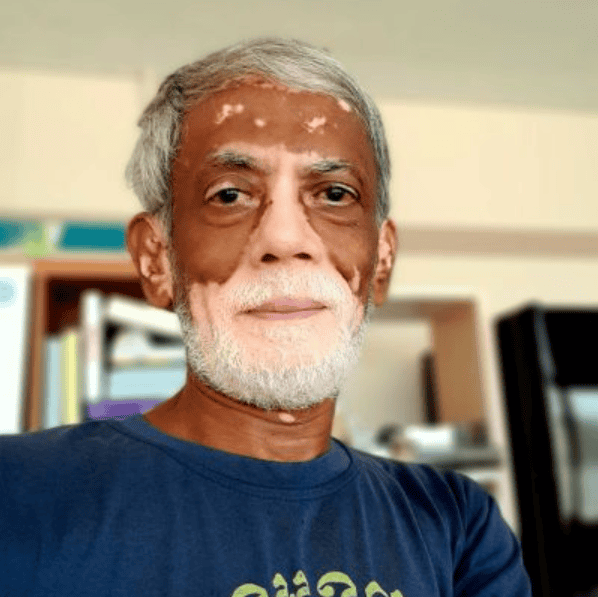
Gautam Basu is a Biophysicist and a former Professor and Chairman of the Biophysics Department at Bose Institute, Kolkata, where he served as the Dean (Students’ Affairs) and the Professor-in-charge of the J C Bose Museum. He was educated at Presidency College (Kolkata), IIT Kanpur and Cornell University (USA) and spent three years as a postdoctoral fellow at Kyoto University before joining Bose Institute. His core research interest is in Computational and Structural Biology. Beyond scientific research, he is actively involved in science communication and has an interest in the History of Science. Currently, he is an Adjunct Professor at IISER Kolkata and the University of Calcutta, and a Visiting Professor at NIPER Kolkata. He is an elected Fellow of the West Bengal Academy of Science and Technology and the Indian National Science Academy.
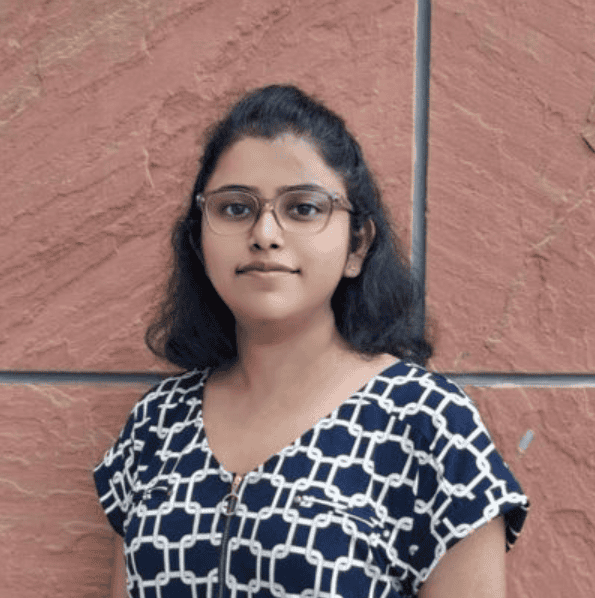
Deblina Raychaudhuri is an Assistant Professor of Biology at Ashoka University. She completed her Integrated Bachelor’s and Master’s degree in Biotechnology from St. Xavier’s College (University of Calcutta), Kolkata and earned her Ph.D. in Immunology from the CSIR-Indian Institute of Chemical Biology, Kolkata. Before joining Ashoka, she was a postdoctoral fellow at the MD Anderson Cancer Centre, Houston, USA.
Dr. Raychaudhuri’s research focuses on human cancer immunology with a particular emphasis on understanding host-immune-tumour interactions to develop more effective and personalised cancer therapies. Her work explores how the different components of the tumour microenvironment shape tumour evolution, immune evasion and resistance to therapy. By integrating multi-omics approaches, her lab aims to uncover new mechanisms driving cancer progression and identify novel therapeutic targets. Ultimately, her research seeks to improve the efficacy of cancer immunotherapies, especially for patients in India, and to guide the development of tailored treatment strategies.
Grading, Assessments, and Certification
All Ashoka Horizons courses offer a certificate on satisfactory completion of the course.
Class participation will be assessed based on your active engagement in live sessions, contributions to discussion forums, and involvement in Teaching Fellow-led activities. Letters of Academic Achievement will be issued for select students based on exceptional performance in the course.
Achieve More…with Horizons:
*For select students, subject to the discretion of the faculty
This course is administered through an online platform. Students are expected to have a foundational understanding of computer usage, including but not limited to sending emails and conducting Internet searches. Consistent access to the Internet and a computer that aligns with the recommended minimum specifications are also requisite for participation in the course.
Have a question about Ashoka Horizons Achievers Programme? Write to us at horizons@ashoka.edu.in
Yes, there’s certainly been a lot that I’ve learned. While I had a foundational understanding of genetics which led to much of the first session being revision, the archaeological aspect of this course has been completely novel. I never knew how different isotopes provide information about past climates, and the nutritional intake of past cultures. Moreover, learning about mass spectrometry and gas chromatography was certainly new, and lipid analysis was something I had never done before.
This summer program was a whole new and enriching experience for me. In my opinion, the classes were filled with informative ideas, an ample amount of activities which allowed us to work with our peers, and a bunch of projects.


Simantini Ghosh
Assistant Professor of Psychology, Ashoka University
Ph.D. University of Rochester
Schedule:May 23, 2026 (Saturday) – June 14, 2026 (Sunday)*

Prof Dipankar Bhattacharya
Head of the Department, Physics,
Sunanda and Santimay Basu Professor of Astrophysics, Ashoka University
Ph.D. Indian Institute of Science, Bengaluru
Schedule:To be announced

Prof Debayan Gupta
Assistant Professor of Computer Science, Ashoka University
PhD, Yale University
Schedule:To be announced
